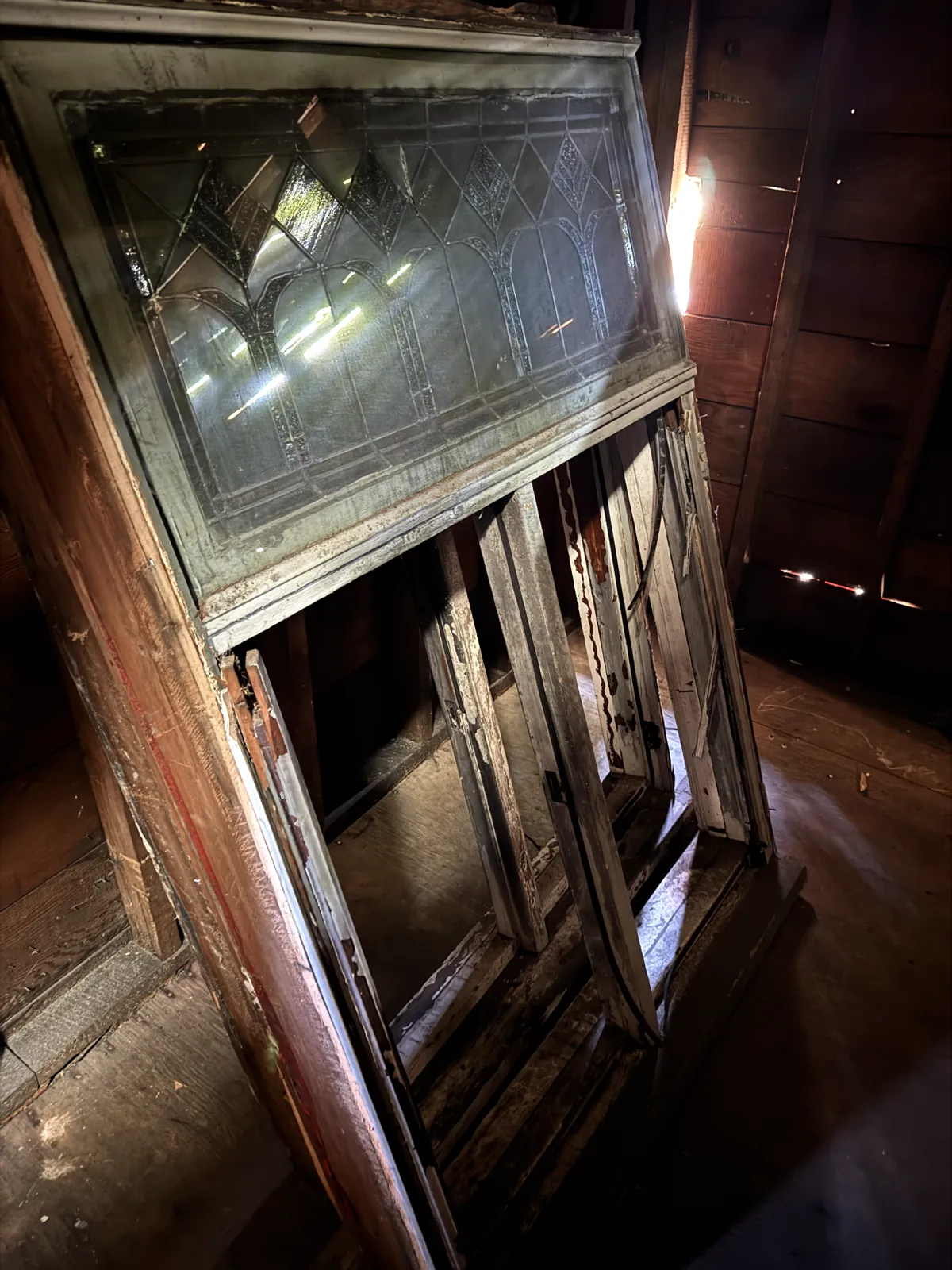
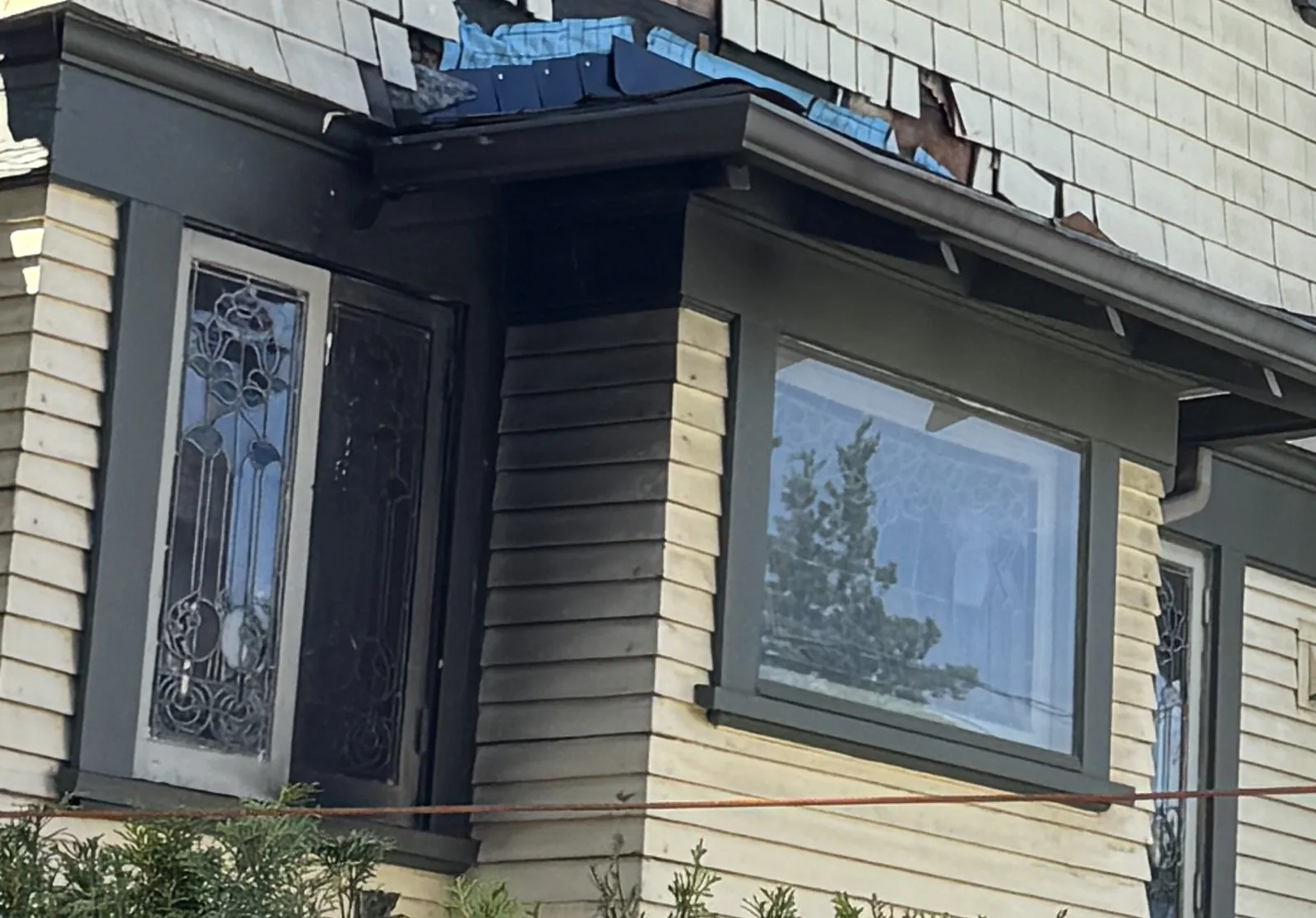
Leaded and stained glass is often the one feature a heritage home cannot get back once it is lost. On a heritage Craftsman we recently assessed and priced in Vancouver, the original art glass had survived a fire in pieces: some panels were still in their openings, and some had been removed and stored inside the house. The question every owner of a home like this faces is simple to ask and harder to answer: do you restore what is there, or replicate it?
Start by knowing exactly what you have
Before anyone prices glass, every opening needs a status. On the drawings for this house, each window carried a tag: existing, new, stained glass existing, or removed. Three openings were marked as existing stained glass. On a first pass, those three had been listed as ordinary windows, which would have sent them to a window manufacturer instead of an art glass studio.
Our rule is to give art glass its own schedule, separate from the windows. Each piece gets a room, a wall, a size and a condition note. It is the only way two trades can quote the same thing.
Option A: restore the original panels
Restoration keeps the original glass. A studio takes the panel apart, cleans each piece, replaces broken pieces with a close match, and rebuilds it with new lead came. The result is the house's own glass, with its original colour and texture.
Restoration makes sense when most of the glass is intact and the panel matters to the character of the room. It also depends on the panels surviving storage. On the house we priced, salvaged sashes were stored inside the house after the fire, and the bid documents told contractors to assume stored heritage items were damaged and would need replacement. That is a warning worth taking seriously on any project: salvage that is not catalogued and protected tends to become replacement.
Option B: replicate new panels
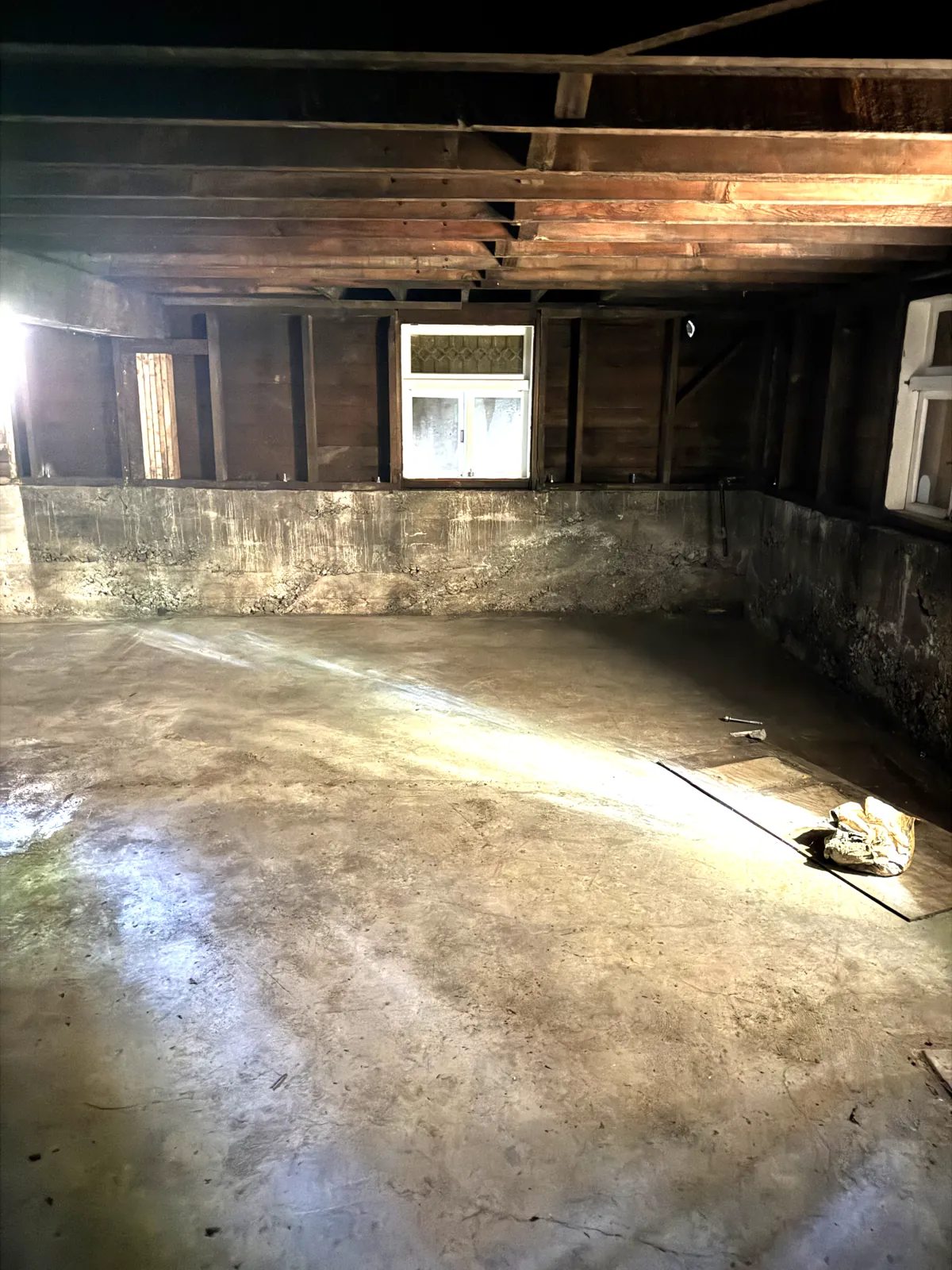
Replication makes new leaded panels to match the originals. The old panel, or a good photograph of it, becomes the pattern. On this project the interior designer had already specified new leaded glass cabinet inserts in the living and dining rooms, designed to match the original, so replication was part of the plan even where no original survived.
Replication makes sense when the originals are badly broken, missing, or when new panels must fit new window frames.
Price both, then decide
When we set up pricing for this house, we asked for both options on the three exterior art glass openings: restore the salvaged sashes, or replicate new panels for installation in new wood frames. Having both numbers side by side lets the owner decide with facts instead of guesses.
Energy rules still apply
New windows on this house had to meet a thermal performance of USI 1.22, set in the tender documents. A single layer of leaded glass does not insulate like a modern sealed glazing unit, so how the art glass sits within the window assembly needs to be worked out early with the window maker and the designer. Existing art glass that stays in place is a different case from new glazing, and it is a conversation to have with your designer and the city before ordering anything. Our article on heritage wood windows covers the window side in more detail.
Protect it during construction
Art glass is fragile, irreplaceable and easy to lose on a busy site. Our approach:
- Inventory every panel with photos and dimensions before work starts
- Store it off the floor, crated, away from demolition and dust
- Keep the old panel available to the studio as the reference for any replica
- Assign one person responsible for the salvage list until handover
Talk to us
If your character home has leaded or stained glass and you are planning a renovation or restoration, Eurohouse can help you decide what to keep, what to restore and what to replicate, and price each option clearly.
See our custom homes and renovations work, or ask about your project. Your first meetings are free.
Call 604-728-5682 or email info@eurohouse.ca.