Balcony & Deck Membrane Inspection for Strata Buildings: Greater Vancouver
The low-commitment first step: a per-balcony condition report with photographs, repair scope, and budget numbers your council can actually plan around, before committing to a repair program. Licensed BC general contractor, 5.0★ (35+ reviews).
Book a Membrane Inspection →
Eurohouse Construction inspects and tests balcony and deck membranes for strata corporations across Greater Vancouver. The inspection is a paid, fixed-fee professional service with a concrete deliverable: balcony-by-balcony condition findings with photographs, a ranking of which balconies are urgent and which can wait, the recommended repair scope, and budget figures a council can take into planning. For a strata whose depreciation report has flagged membranes (or whose balconies are simply reaching the age where original membranes fail), it is the lowest-commitment way to replace guesswork with evidence.
Why inspect before budgeting
A depreciation report projects when membranes will need renewal and reserves a planning figure: it doesn’t tell you the condition of your balconies this year. Two buildings of the same age can be a decade apart in real membrane life depending on exposure, drainage, and original workmanship. An inspection converts the report’s projection into building-specific facts: which balconies are failing now, which have years left, and whether water has already reached the structure. Councils that inspect before budget season set levies and contingency contributions from evidence, and avoid both over-collecting and emergency assessments.
What we look at
Membrane surface: blisters, splits, open seams, UV chalking, ponding patterns. Details: edge metal, door thresholds, post penetrations, deck-to-wall interfaces, the places membranes actually fail. Drainage: drain and scupper function, slope adequacy. Structure: moisture scanning of the substrate, soft-spot probing, and where warranted (and approved by the council) a small test opening to confirm the condition of the plywood beneath, closed and sealed the same day. Guardrails: attachment and base flashing condition, since railing work is often the hidden half of a membrane project’s cost.
The natural next step, if there is one
If the findings show your membranes have life left, the report simply becomes the documented baseline for your records and next depreciation-report cycle: that is a good outcome, and it is yours to keep regardless of who ever does repair work. If repairs are warranted, the inspection flows directly into a scoped, fixed-price balcony repair program: the test results become the pricing basis, which is exactly what lets us fix the number a council takes to its owners.
The membrane is the visible 20%
On a recent North Vancouver project, decks that looked serviceable from above were feeding water into wall framing through failed drainage details, found only when assemblies were opened. Inspection and testing exist to find that before it becomes structural. See the project →
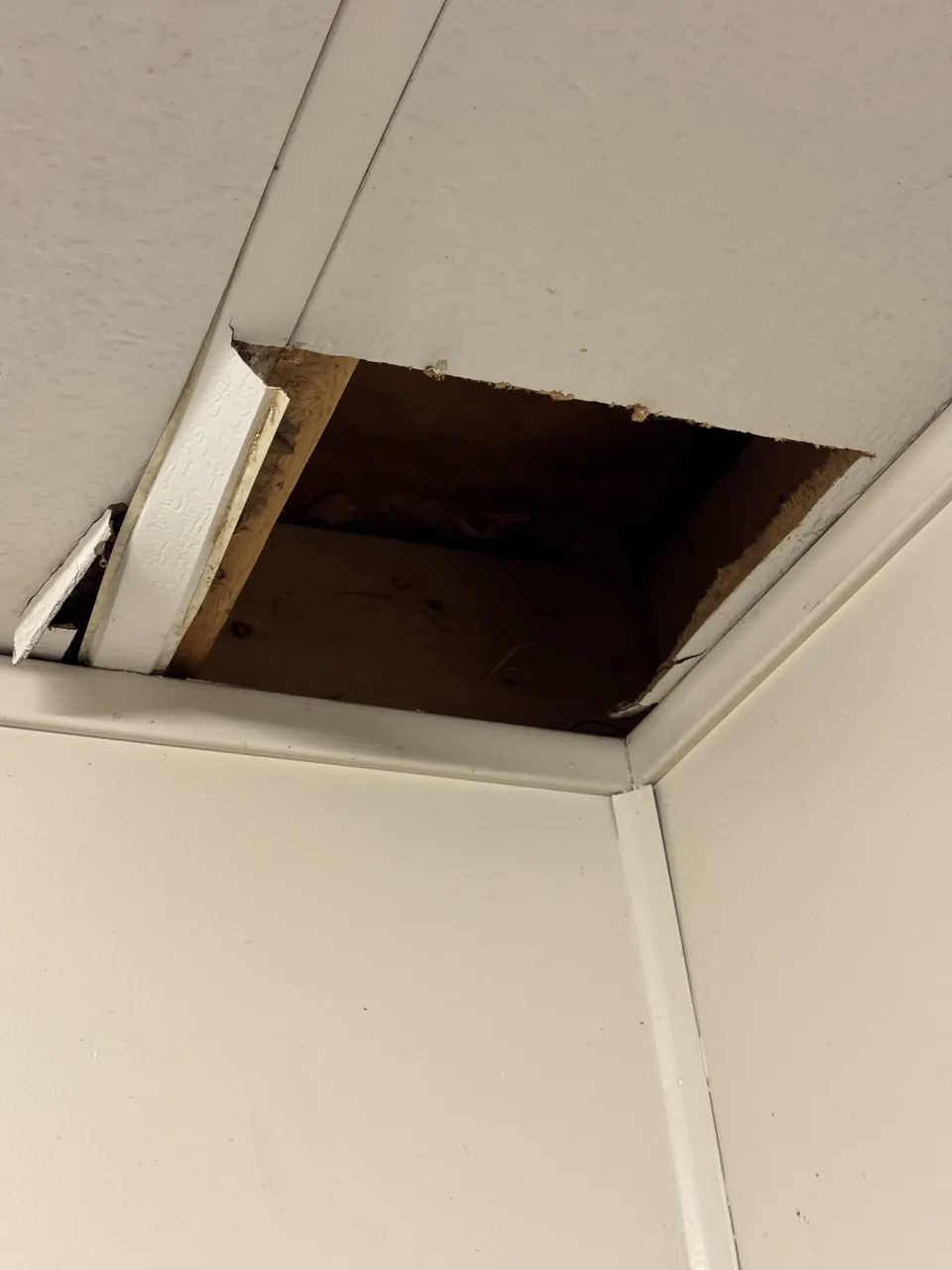
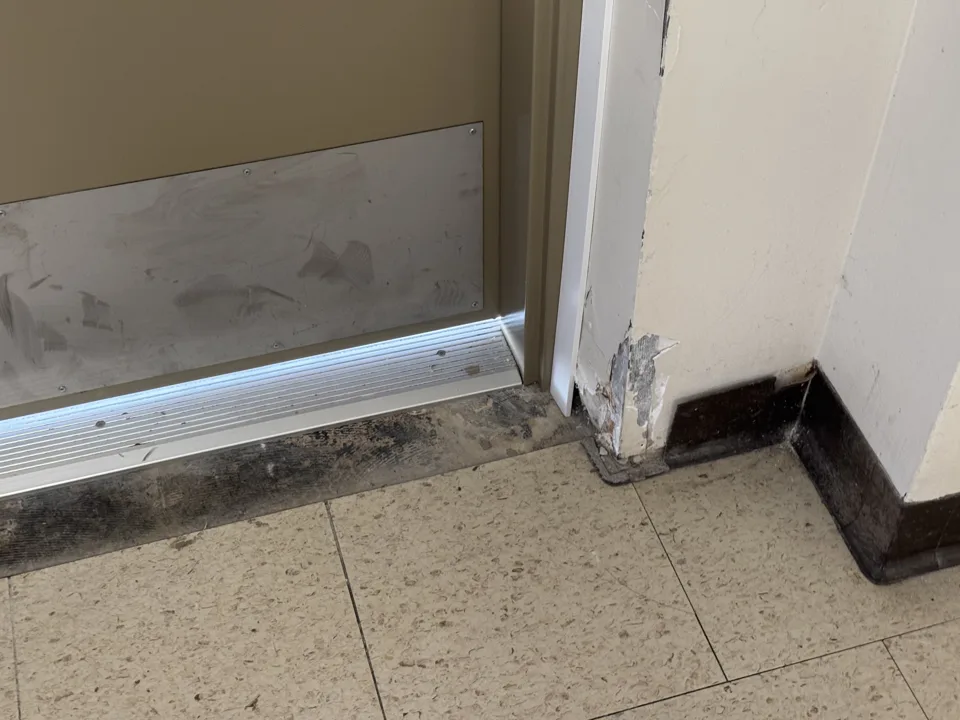
Left: a small test opening: cut, documented, and closed the same day. Right: what un-inspected membranes eventually cost on the inside of the building.
Membrane Inspection: FAQ
What does a balcony membrane inspection include?
A physical, balcony-by-balcony assessment: membrane surface condition (blisters, splits, seam failures, ponding), drain and scupper function, edge and door-threshold flashing details, guardrail attachment points, moisture scanning of the substrate, and (where warranted and approved), a small test opening to confirm what the plywood beneath actually looks like. Every balcony gets photographed findings and a condition grade, so the council sees which balconies are urgent, which can wait, and why.
What does the strata receive at the end of the inspection?
A written condition report designed for council use: per-balcony findings with photographs, a condition ranking across the building, the recommended repair scope, and realistic budget figures for planning: whether that means immediate repairs, a phased program, or simply a documented baseline for your next depreciation report. The report is yours regardless of who does any eventual repair work.
How much does a membrane inspection cost?
It depends on the number of balconies and access, but it is a modest, fixed fee agreed before we attend, typically a small fraction of one balcony's repair cost. It is priced as a professional service, not a free sales visit: the deliverable is an objective condition report your council can act on, and if repairs do proceed with Eurohouse, the inspection findings become the basis of a fixed-price program.
When should a strata inspect its balcony membranes?
Three common triggers: the depreciation report has flagged balcony or deck membranes within its 30-year projection and the council wants real numbers before budget season; visible symptoms have appeared on some balconies (blisters, soft spots, staining below decks); or membranes are approaching the typical 20-25 year end of service life for original 1990s installations. Inspecting before failure is what keeps the repair a program instead of an emergency.
Is an inspection required before getting a repair quote?
Not formally, but a quote without an inspection is an allowance, not a price. Testing a representative sample of balconies is what lets us contract building-wide membrane programs at a fixed price with defined unit rates for concealed conditions, instead of an estimate that grows after owners have voted. For councils taking a number to an AGM, that difference is the whole game.
Want real numbers before budget season?
Email info@eurohouse.ca with your building’s address, age, and number of balconies. We’ll confirm the fixed inspection fee and typical turnaround for the condition report.
Email info@eurohouse.ca → Strata Balcony Repair →