Water Ingress Investigation for Strata Buildings: Find the Source Before Funding the Fix
Something is letting water in, and nobody can tell you where. We investigate first: moisture mapping, targeted exploratory openings, documented findings. Then, and only then, a scoped fixed-price repair your council can stand behind. Greater Vancouver. 5.0★ (35+ reviews).
Describe What You’re Seeing →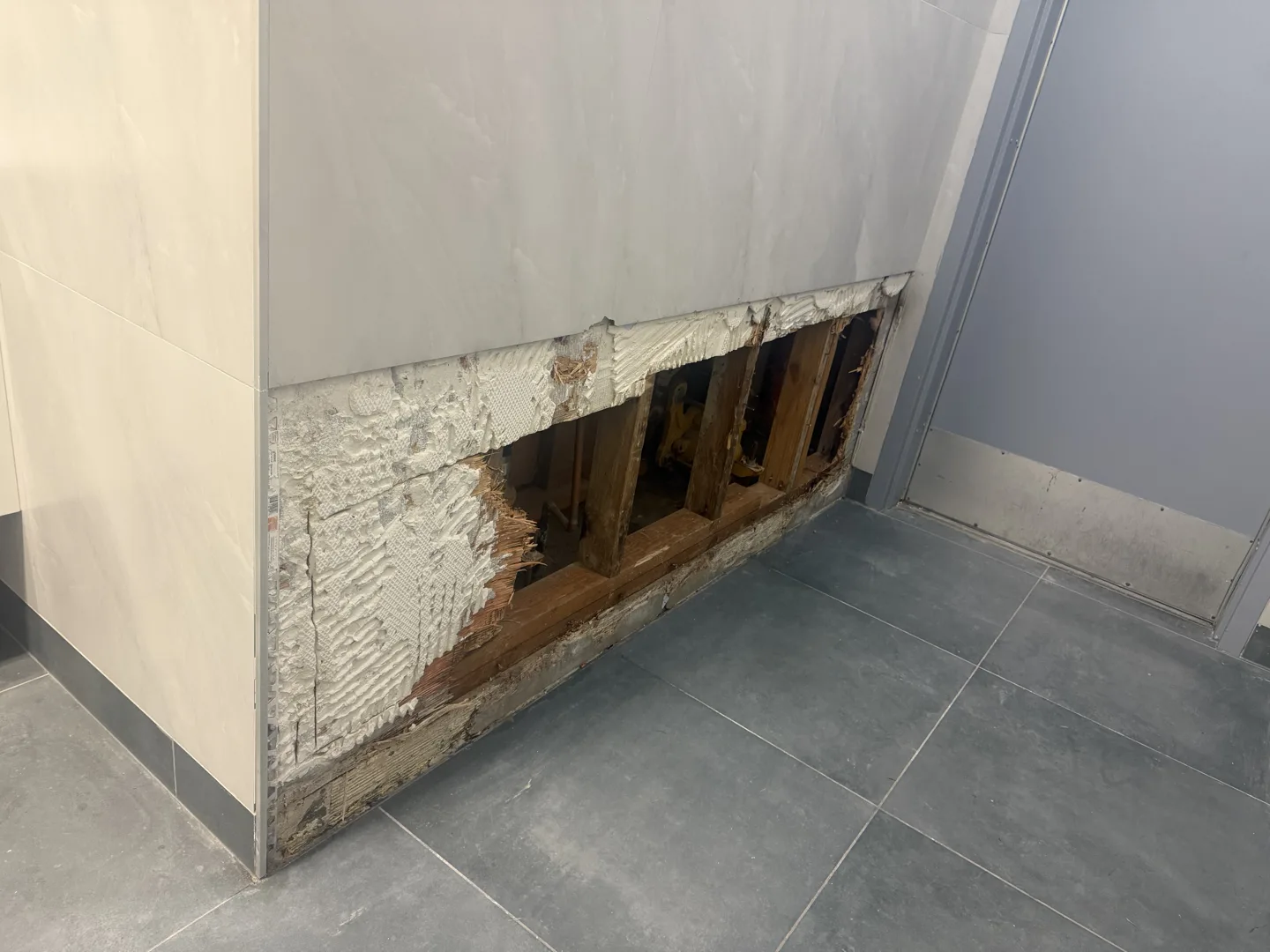
Eurohouse Construction investigates and repairs water ingress in strata buildings across Greater Vancouver. Our approach is investigation-first: establish where the water enters, what it has damaged, and how far it has travelled, before anyone prices a repair. For councils this changes everything downstream. Instead of a vague allowance for “possible rot,” you get documented findings, a defined scope, and a fixed price built on evidence, the difference between one owners’ vote and two.
“The windows are out of level and we don’t know why”
Water ingress announces itself indirectly. A ceiling stain in one suite. Windows drifting out of level. A door that stopped closing square. A musty smell after atmospheric-river weather that no one can locate. In 1990s wood-frame stratas especially, water entering at a balcony-to-wall interface, a window head, or a failed fascia detail can travel metres along framing before it shows, so the visible symptom and the actual entry point are routinely in different places, sometimes on different floors. Chasing the symptom leads to repeat repairs; tracing the path leads to one.
How the investigation works
We start with what your building already knows: history of complaints, previous repairs, and the envelope sections of your depreciation report. Then the physical work: an exterior survey of suspect elevations, moisture-meter mapping inside affected suites, and small, targeted exploratory openings, sized and placed to answer specific questions, not to tear the building apart. Every opening is photographed, every reading logged. Your council receives a written findings summary: where water enters, what is wet, what is rotten, and a scoped repair recommendation with a fixed price. If the findings warrant a building-envelope engineer, we say so plainly, and work to their specification when retained.
From findings to a repair owners will fund
The investigation deliverable is designed for the room where it will be read: a council meeting. Photographs owners can understand, findings in plain language, the repair scope itemized, and the price fixed, with bonding, $5M liability, WorkSafeBC coverage, and warranty attached. When the vote passes, the same team that diagnosed the building repairs it: structural drying, rot remediation, sheathing and framing repair, membrane and flashing renewal, and finishes restored inside and out.
The finishes looked fine. The studs behind them didn’t.
Water from frozen balcony drains had been entering wall assemblies for seasons before mold at a baseboard finally gave it away. Exploratory openings revealed rotted studs and saturated sheathing well beyond the visible damage. We opened, dried, rebuilt, and re-membraned, and re-engineered the drainage so it can’t recur. See what the walls were hiding →
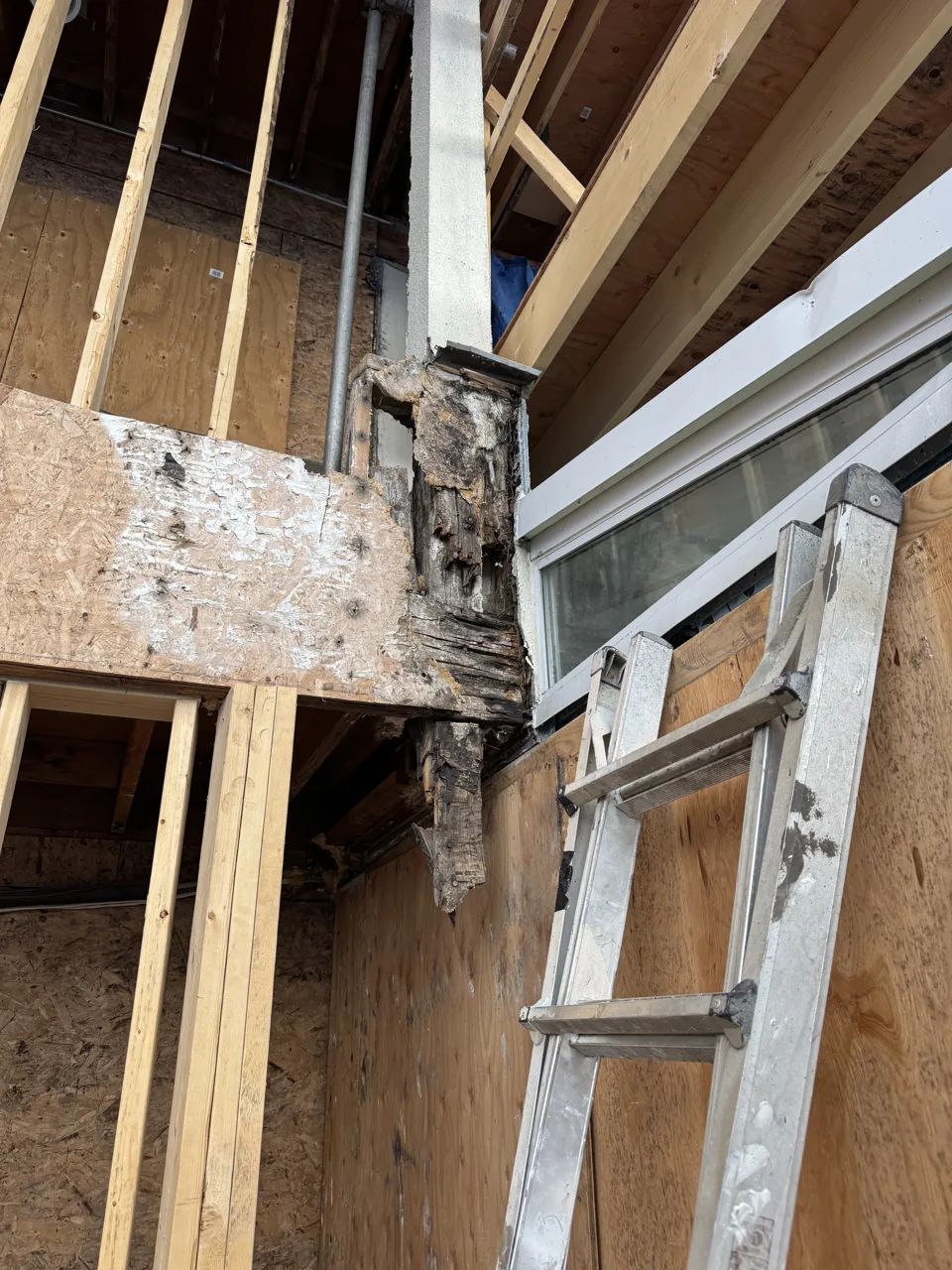
An opened wall assembly at a window header, the concealed damage investigation openings are designed to find.
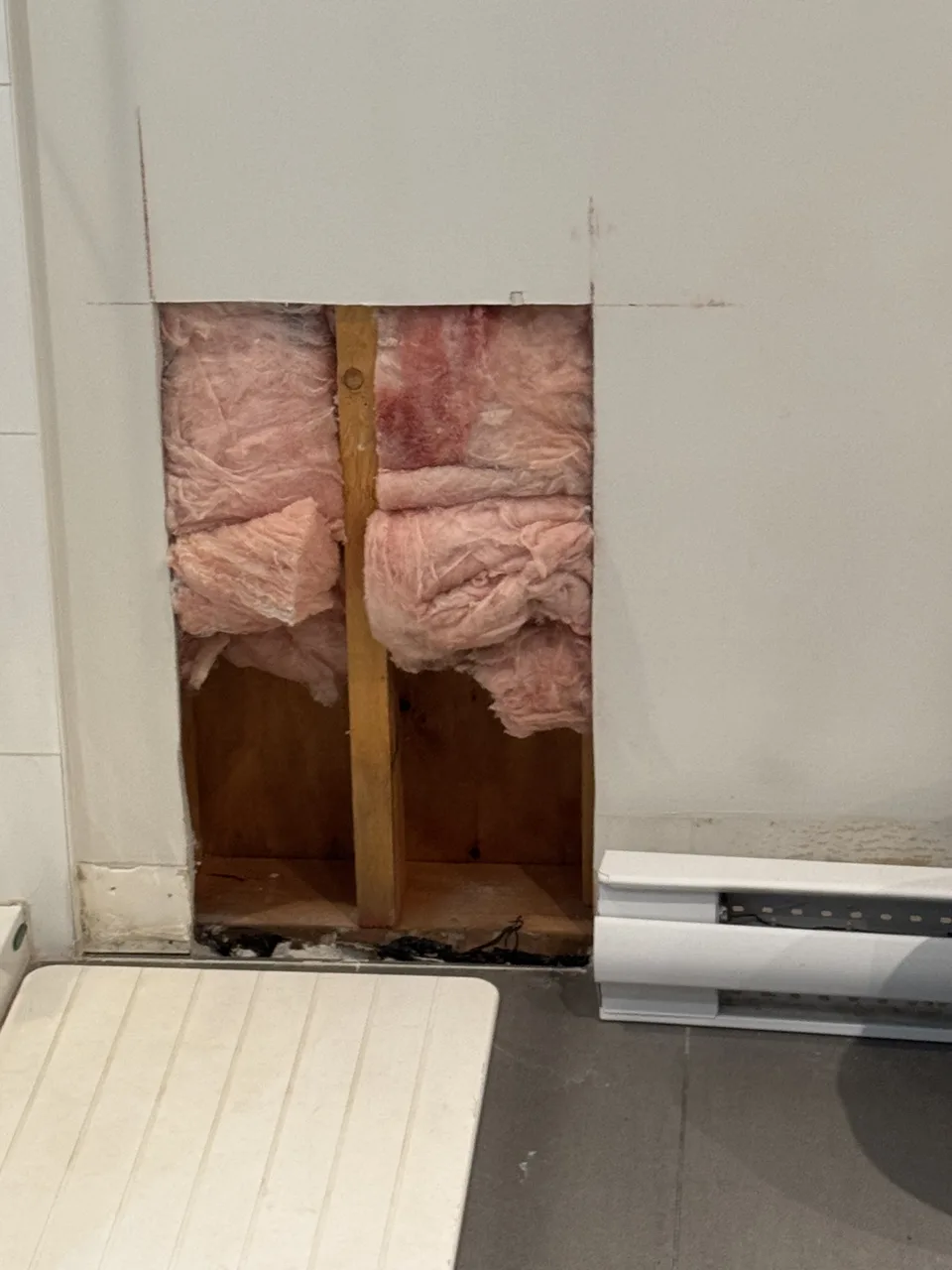
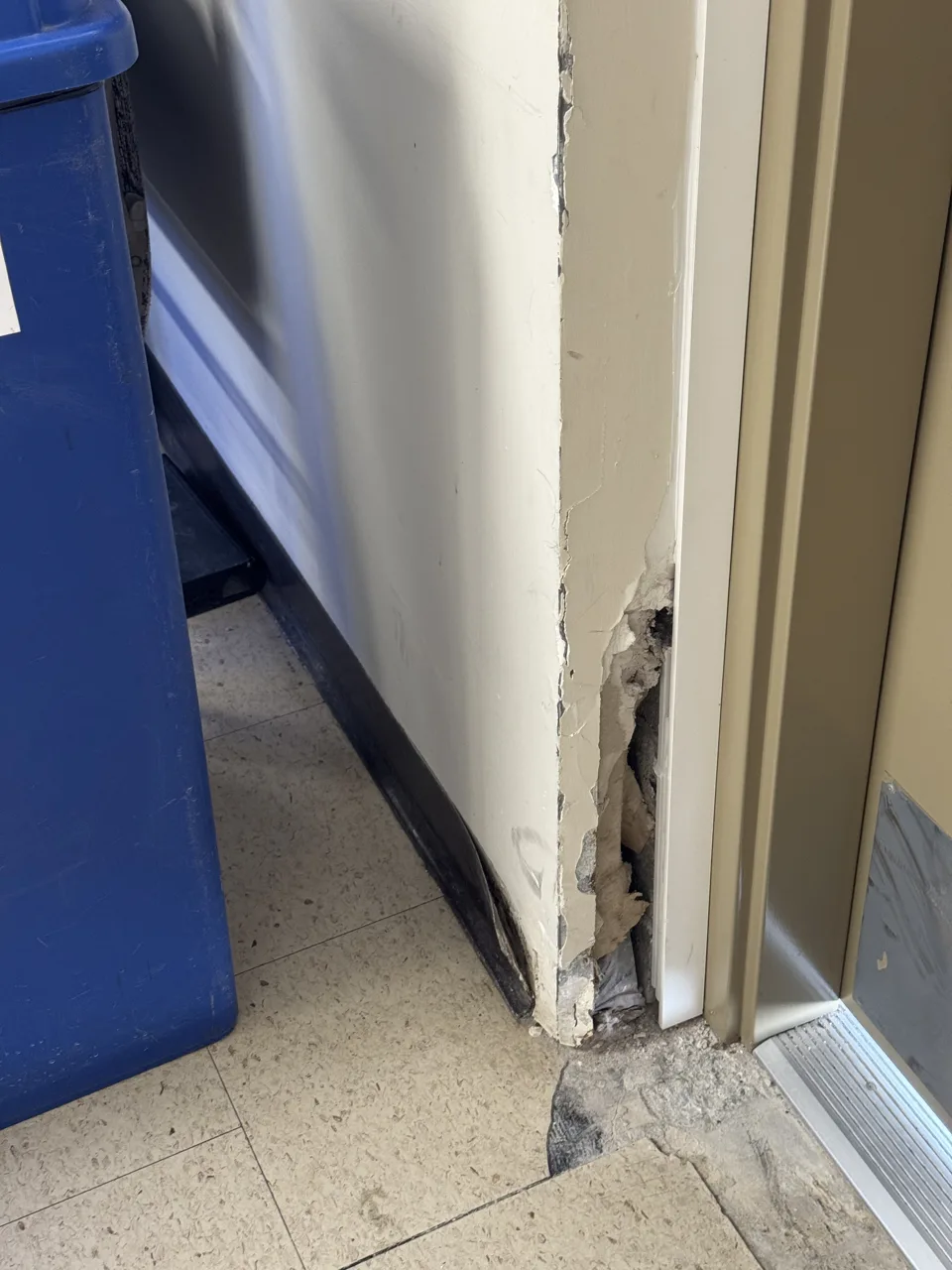
Symptom and source are rarely in the same place: a deteriorating door frame or damp baseboard is where water shows, exploratory openings find where it enters and what it has reached.
Water Ingress: FAQ
What are the signs of water ingress in a strata building?
Staining or bubbling paint on ceilings and around window heads, musty smells in specific suites after rain, efflorescence on concrete, swollen baseboards or door casings, exterior sealant failures, and subtler structural signals: windows going out of level, doors that stop closing square, or cracking that tracks a building line. In wood-frame stratas the visible symptom is often far from the entry point, because water travels along framing and sheathing before it shows.
Why investigate before repairing water ingress?
Because repairing the symptom without finding the source means paying twice. Water showing at one suite's ceiling may be entering at a balcony-to-wall interface two floors up, a window head flashing, or a fascia detail. An investigation (moisture readings, targeted exploratory openings, and tracing the path) establishes what is actually wet, what is rotten, and where the water enters. The repair scope is then built on evidence, which is what makes a fixed price possible and defensible to owners.
What does a water ingress investigation involve?
Typically: review of the building's history and depreciation report notes, exterior survey of the suspect elevations, moisture-meter mapping inside affected suites, then small targeted exploratory openings (from inside or outside depending on the assembly), to see the actual condition of sheathing, framing, and membranes. Everything is photographed and documented. Your council receives a written findings summary with the entry points identified, the extent of damage, and a scoped repair recommendation with a fixed price.
Who pays for water ingress repairs in a BC strata, the strata or the owner?
As a general rule under BC's Strata Property Act framework, the building envelope and common property are the strata corporation's responsibility, while damage inside a suite may fall to the owner or their insurance depending on the strata's bylaws and insurance deductible provisions. Every strata's bylaws differ: we document findings thoroughly so your council, property manager, and insurer can allocate responsibility correctly, and we've worked on both insurance-funded and strata-funded repairs.
Can water ingress repairs be done without owners moving out?
Almost always, yes. Envelope repairs are staged from the exterior wherever possible; where interior access is needed, work is contained room-by-room with dust protection and daily cleanup. In the rare case a suite is genuinely uninhabitable during structural drying, we plan that phase with the council and the affected owner in advance rather than mid-project.
Seeing signs of water ingress?
Email info@eurohouse.ca with what you’re seeing, where, and since when, photos help. We’ll tell you whether it warrants an investigation and what that would involve for your building.
Email info@eurohouse.ca → For Strata Councils & Managers →