Your Depreciation Report Flagged Envelope Work. Here’s What Happens Next.
A depreciation report line item is a projection, not a project. Eurohouse turns flagged balcony, membrane, and envelope work into a scoped, sequenced, fixed-price contract your owners can vote on, starting with a free plain-language review of your report’s envelope pages. Greater Vancouver. Bonded, $5M liability, 5.0★ (35+ reviews).
Get a Free Report Review →
BC strata corporations with five or more lots must now hold current depreciation reports stratas in Metro Vancouver, the Fraser Valley, and the Capital Regional District were required to have one by July 1, 2026, with reports renewing every five years and projecting 30 years of maintenance costs against at least three funding models. Thousands of buildings are now holding engineer-written documents that itemize their balcony membranes, flashing, fascia, and envelope deficiencies. Eurohouse Construction is the contractor for the step the report doesn’t cover: turning those line items into scoped, fixed-price, bonded repair projects, and we’ll read your report’s envelope pages with you, free, to show you what’s actually in there.
A line item is not a project
Say your report carries a line like “balcony membrane renewal: $40,000, years 2-4.” That figure is a planner’s benchmark applied from a distance. It doesn’t know whether your membranes have two years left or are feeding water into wall framing right now; it doesn’t include what’s found when substrates are opened, railing reinstatement, access costs, or current market pricing. Between that line and a project owners can fund sits real work: inspection and testing, scope definition, sequencing, and a contract structure that holds the number. That middle step is what we do, and skipping it is how stratas end up voting twice for the same repair.
From report to AGM: the sequence that works
1. Read the report properly. Email us the envelope pages: we return a free plain-language summary of what each flagged item involves as construction, what’s urgent, and what can sensibly wait or be combined. 2. Test before pricing. A membrane inspection or targeted water-ingress investigation converts the report’s projections into your building’s facts. 3. Fix the scope and the price. Defined scope, fixed price, defined unit rates for concealed conditions, bonding, $5M liability, WorkSafeBC, written warranty. 4. Give owners something they can vote for. Price, protections, schedule, and the funding-model comparison your report already frames, one meeting, one vote, then construction. Where your strata’s engineer or report author stays involved, we work to their specification and review throughout.
Why councils bring this to us
The repairs depreciation reports flag most (balcony runs, membranes, flashing and fascia, localized envelope rebuilds), sit in the $30k-$500k band that big remediation contractors won’t mobilize for and small trades can’t bond or warranty. Eurohouse is a licensed BC general contractor (since 2009) built for exactly this scale: strata work delivered fixed-price with the documentation a council needs, by the same firm that handles insurance-funded restoration and commercial construction across Greater Vancouver, and builds custom homes in Whistler and the Sea-to-Sky corridor. 16+ years, 100+ projects, 5.0★ on Google (35+ reviews).
Send the envelope pages. Get back a straight answer.
What the flagged items actually involve • what’s urgent vs. deferrable • what to combine into one mobilization • where the real cost drivers are • what a realistic budget range looks like. No site visit, no commitment, email info@eurohouse.ca with the pages attached. This is a construction review, not a statutory depreciation report or an engineering opinion.
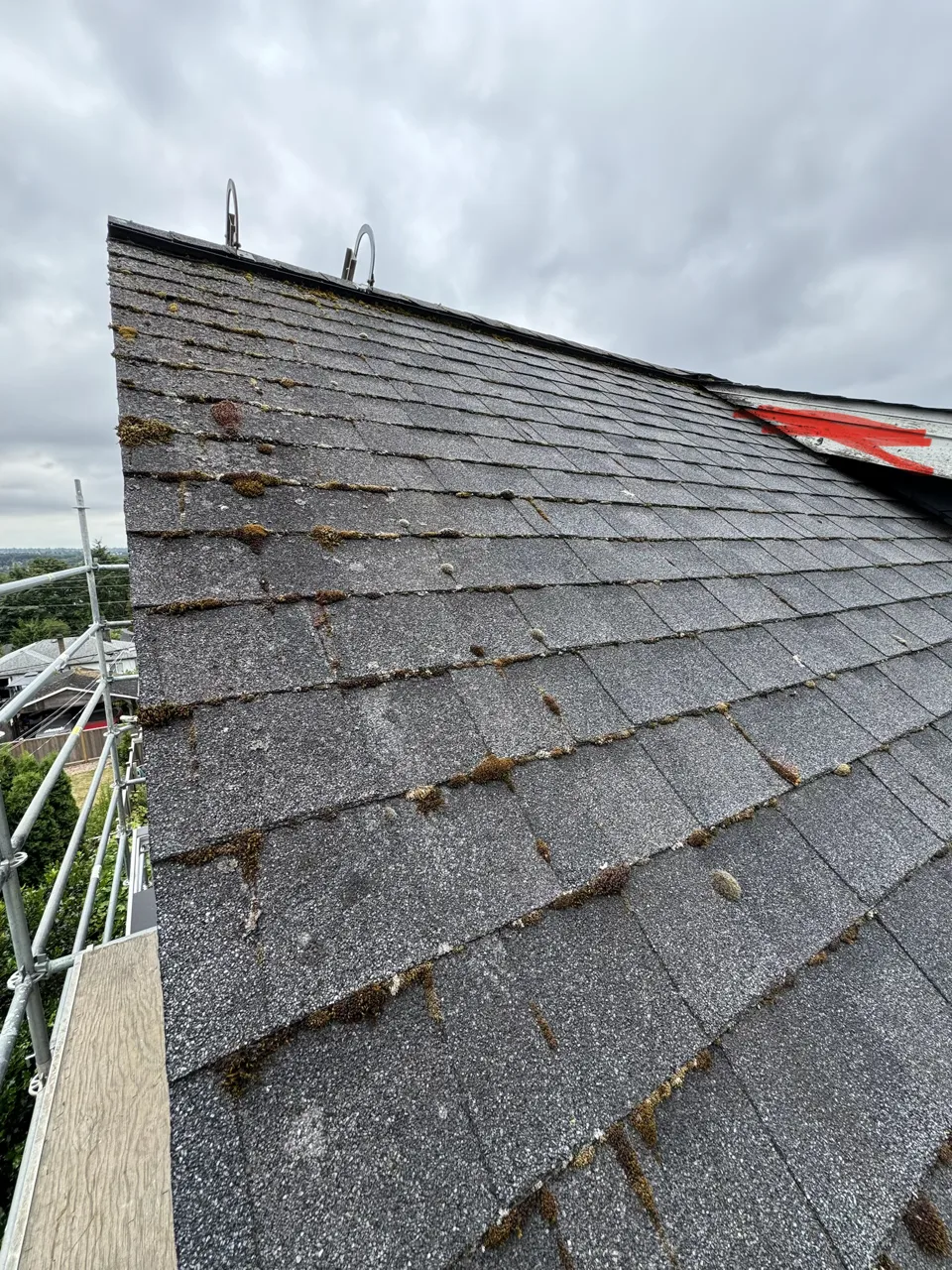
A funded line item in progress, scaffold up, envelope renewal underway.
Depreciation Reports & Repairs: FAQ
What are BC's depreciation report requirements for stratas?
Under BC's Strata Property Act regulations, strata corporations with five or more lots must obtain depreciation reports, the old option of deferring by annual 3/4 vote has been eliminated. Stratas in Metro Vancouver, the Fraser Valley, and the Capital Regional District were required to have a report by July 1, 2026 (stratas elsewhere in BC have until July 1, 2027). Reports must be renewed every five years and must project 30 years of maintenance and renewal costs, with at least three ways of funding them: such as contingency reserve contributions, special levies, or borrowing. The full requirements are published by the BC government; your report itself is prepared by a qualified professional such as an engineering firm.
Our depreciation report flagged balcony membranes. What should the council do next?
First, understand what the line item actually is: a planner's renewal projection with an allowance-level cost, not a repair scope. The practical sequence is: (1) get a plain-language read of what the flagged work involves for your specific building: we do this free from your report's envelope pages; (2) inspect and test the actual components so condition is fact, not projection; (3) get the work scoped and priced fixed, with bonding, warranty, and sequencing; (4) take that complete package to owners for the funding decision. Councils that follow this order vote once; councils that fund an allowance and scope later often vote twice.
Is the dollar figure in our depreciation report what the repair will actually cost?
Treat it as a planning allowance, not a price. Depreciation-report figures are typically benchmark unit costs applied at a distance: they can't see the condition of your substrates, the extent of concealed rot, access constraints, or current market pricing. The real number comes from inspection, testing, and a defined scope. Sometimes it's lower than the report figure; where water has been in the structure, it can be higher, which is exactly why finding out before the owners' vote matters.
What is Eurohouse's free depreciation report review?
Email the building-envelope pages of your depreciation report to info@eurohouse.ca and we return a plain-language read, at no cost: what each flagged item actually involves as construction, what's urgent versus deferrable, sensible sequencing (what to combine, what to phase), and where the real cost drivers will be. It's a 15-minute conversation on paper, no site visit or commitment required. Councils and property managers use it to walk into their next meeting understanding the report instead of just holding it.
What should a strata council have in hand before asking owners to approve a special levy?
Four things: a fixed price (not an estimate), proof the contractor can stand behind the job (bonding, $5M liability, WorkSafeBC, and a written warranty), a construction sequence showing how residents are affected and for how long, and the funding-model comparison your depreciation report already frames (reserve fund, special levy, borrowing, or a mix). Owners approve projects they can understand; most failed levy votes are really scoping and communication failures.
Holding a new depreciation report?
You don’t need to decode it alone. Email the building-envelope pages to info@eurohouse.ca and we’ll return a plain-language read your whole council can use at its next meeting.
Email Your Report Pages → For Strata Councils & Managers →