Building or renovating in West Vancouver has always required careful coordination with municipal bylaws, but tree protection rules have evolved significantly over the past decade. And as of late 2025, they became even more impactful for anyone planning a new build.
At Eurohouse Construction, we've been working in West Vancouver for over 16 years. We've seen policies change, enforcement tighten, and we know firsthand how early planning around trees can save months of delays and tens of thousands of dollars on a project.
The Big Change: Protected Trees Now Start at 20 cm for New Developments
On December 15, 2025, the District of West Vancouver adopted amendments to its Tree Bylaw in support of the Urban Forest Management Plan. The most significant change is one that every homeowner and builder needs to understand.
New Protected Tree Threshold
For any property undergoing new development (including single-family homes, multi-family projects, commercial buildings, or demolition tied to a new build), the definition of a protected tree was lowered from 75 cm DBH to just 20 cm DBH (diameter measured at 1.4 m above grade).
This lower threshold applies from the moment a development, demolition, or building permit application is submitted, throughout review and approval, and until the building permit is officially completed.
What the District Now Requires
- Legal surveys identifying all protected trees down to 20 cm DBH
- Tree protection fencing around these trees on active construction sites
- Arborist reports for any removal or impact
- Replacement planting commitments and security deposits
- Continued compliance with all Tree Bylaw provisions throughout construction
Does This Apply to Renovations?
The 20 cm threshold applies specifically to new builds and redevelopment. Additions, interior renovations, landscaping-only projects, and hazard tree work on existing properties generally remain under the previous 75 cm threshold.
Why This Matters More Than Most Owners Realize
Trees that once fell below regulatory radar are now protected assets. From a construction perspective, this change is substantial.
Site Layout
Building footprint and setback decisions
Foundation Design
Excavation paths and depth constraints
Construction Access
Staging, crane pads, and material delivery
Permit Timelines
Additional review and approval steps
Replacement Planting
Mandatory replanting and security deposits
Project Cost
Arborist fees, surveys, and compliance
⚠ Common Mistake
We routinely see projects delayed because tree implications were discovered too late, after architectural design was complete or demolition had already been planned. The earlier trees are addressed in the planning process, the smoother everything becomes.
When Trees Require Heavy Equipment
West Vancouver's steep terrain, dense canopy, and tight lot setbacks mean that tree removal is rarely straightforward. Large, mature conifers near structures, power lines, or neighbouring properties often can't be felled conventionally.
In these situations, we coordinate crane-assisted tree removal, bringing in heavy-lift equipment to dismantle trees section by section from above, lowering each piece safely to the ground. It's the only viable approach when access is limited, structures are at risk, or the tree is too large for ground-based methods.
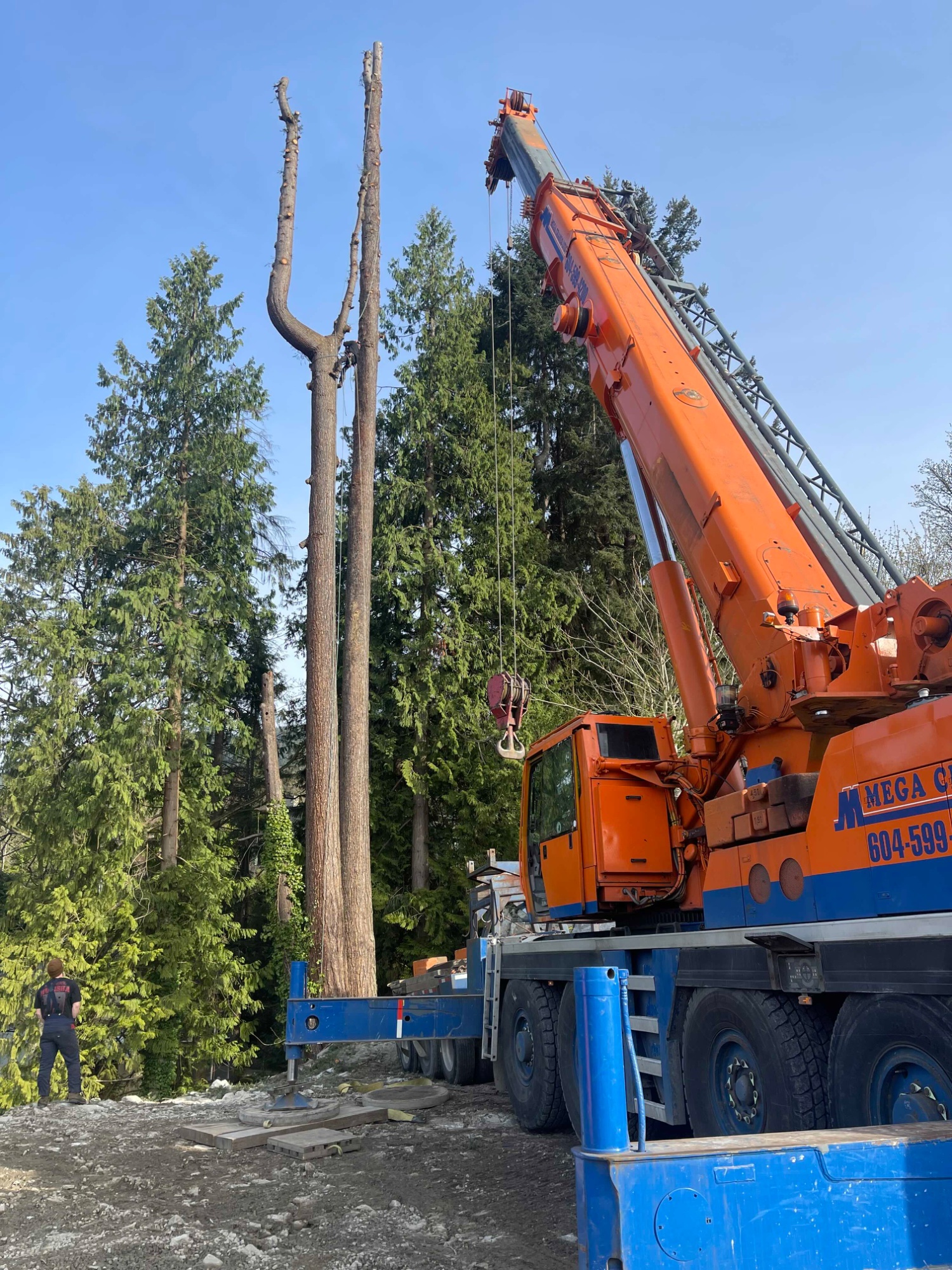
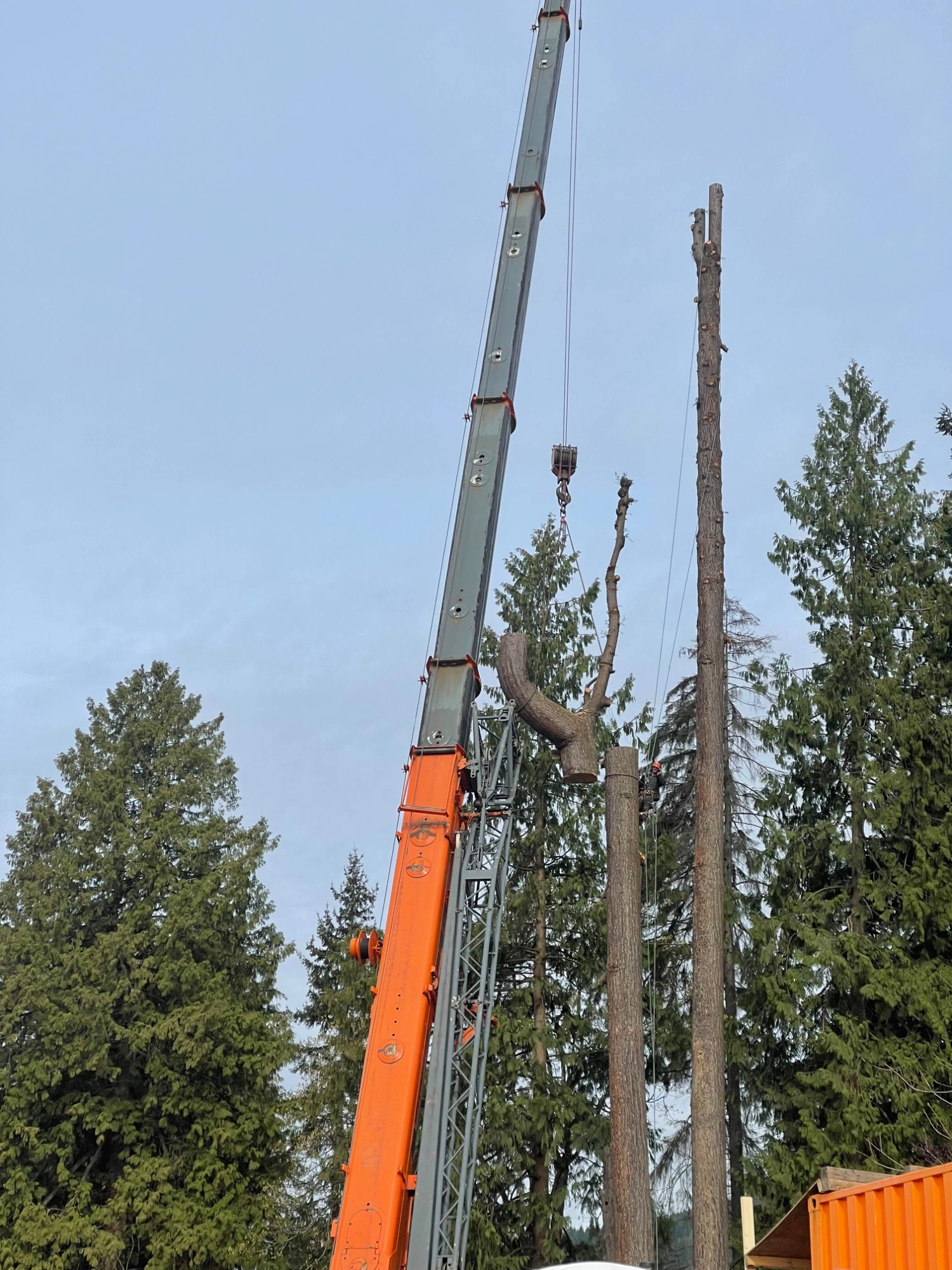
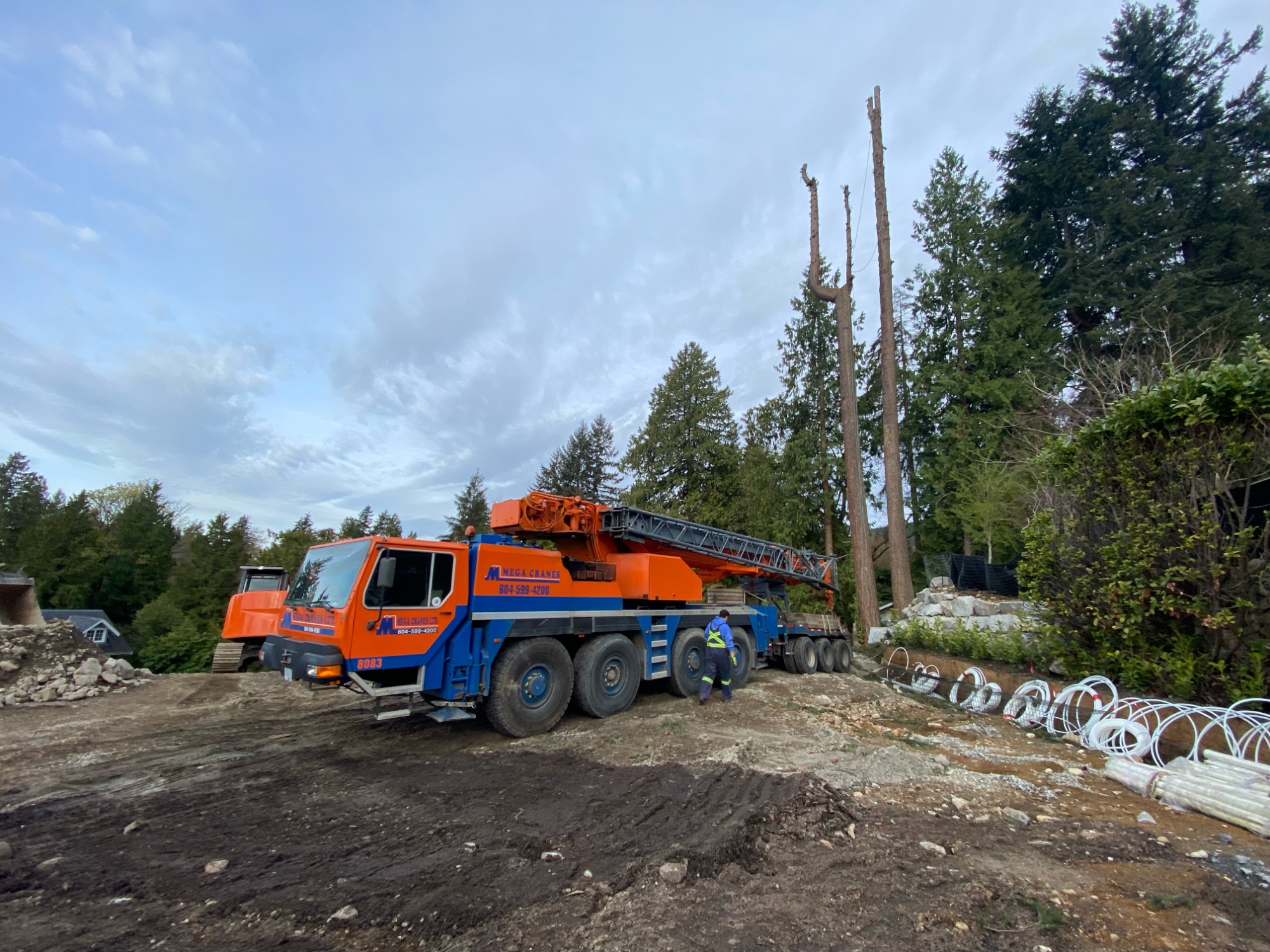
Crane-assisted tree removal on a West Vancouver construction site, the only viable approach when access is limited and trees are too large for ground-based methods.
This kind of operation requires careful planning: crane access routes, load calculations, coordination with arborists, and often District notifications. It's one of the many realities of building on the North Shore that generic contractors from outside the area may not anticipate.
When Trees Become Structural Events
Beyond permitting and removal, trees also represent a real physical risk in our coastal climate. Storm-driven tree failures can destroy structures in seconds.
We recently managed a project on Rosebery Avenue in West Vancouver where a mature tree fell onto a guest house during storm conditions. It was a total loss, the building had to be fully reconstructed. That project required insurance coordination, a new architectural design, engineering, a District development permit, design board review, and neighbour consultation, all managed by Eurohouse from start to finish.
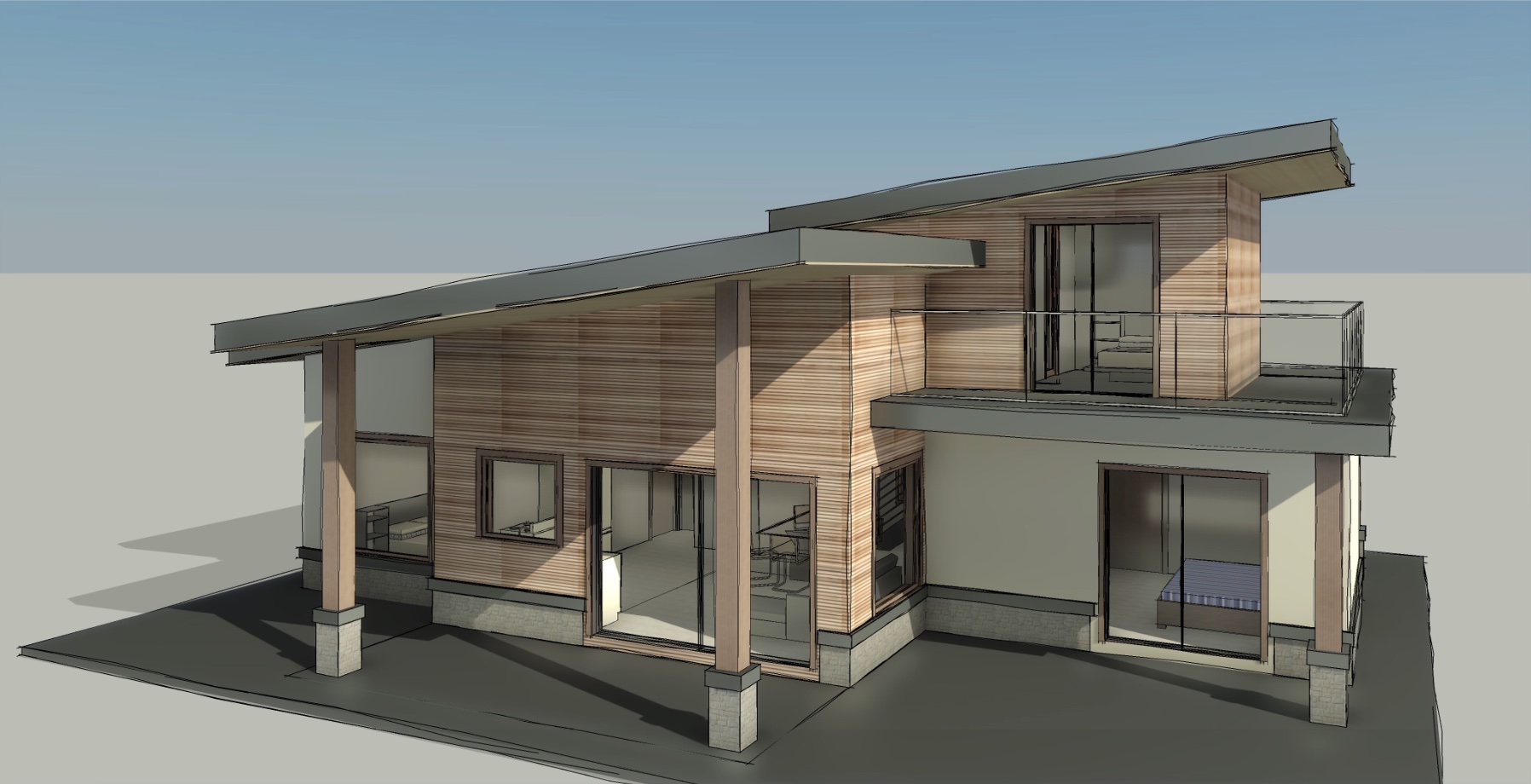
Case Study: Rosebery Avenue Guest House Rebuild
From fallen tree to permitted new build: insurance-funded reconstruction with development permit, design board review, and modern accessory dwelling design.
View Project →16 Years in West Vancouver: We Know How the System Moves
Eurohouse has been building and restoring homes across West Vancouver for over 16 years. Over that time, we've worked through multiple Tree Bylaw revisions, development permit processes, emergency hazard tree scenarios, insurance-funded rebuilds, and high-value custom homes with complex site constraints.
What We Manage for Our Clients
- Arborist coordination and reports
- Tree protection planning for construction
- Permit sequencing around tree regulations
- Crane-assisted hazard tree removal
- Structural assessment after tree impact
- Rebuild vs. repair decision-making
- Insurance claim coordination
- Construction that respects bylaws and design
We understand how these policies are interpreted on the ground, not just how they're written. That institutional knowledge allows us to guide clients through the full process, from initial site assessment to final occupancy.
Start Early
Whether you're considering a new custom home, evaluating a property for redevelopment, or dealing with storm damage, an early conversation about trees can prevent costly missteps. We're always happy to review your site and explain how current bylaws apply to your specific situation.