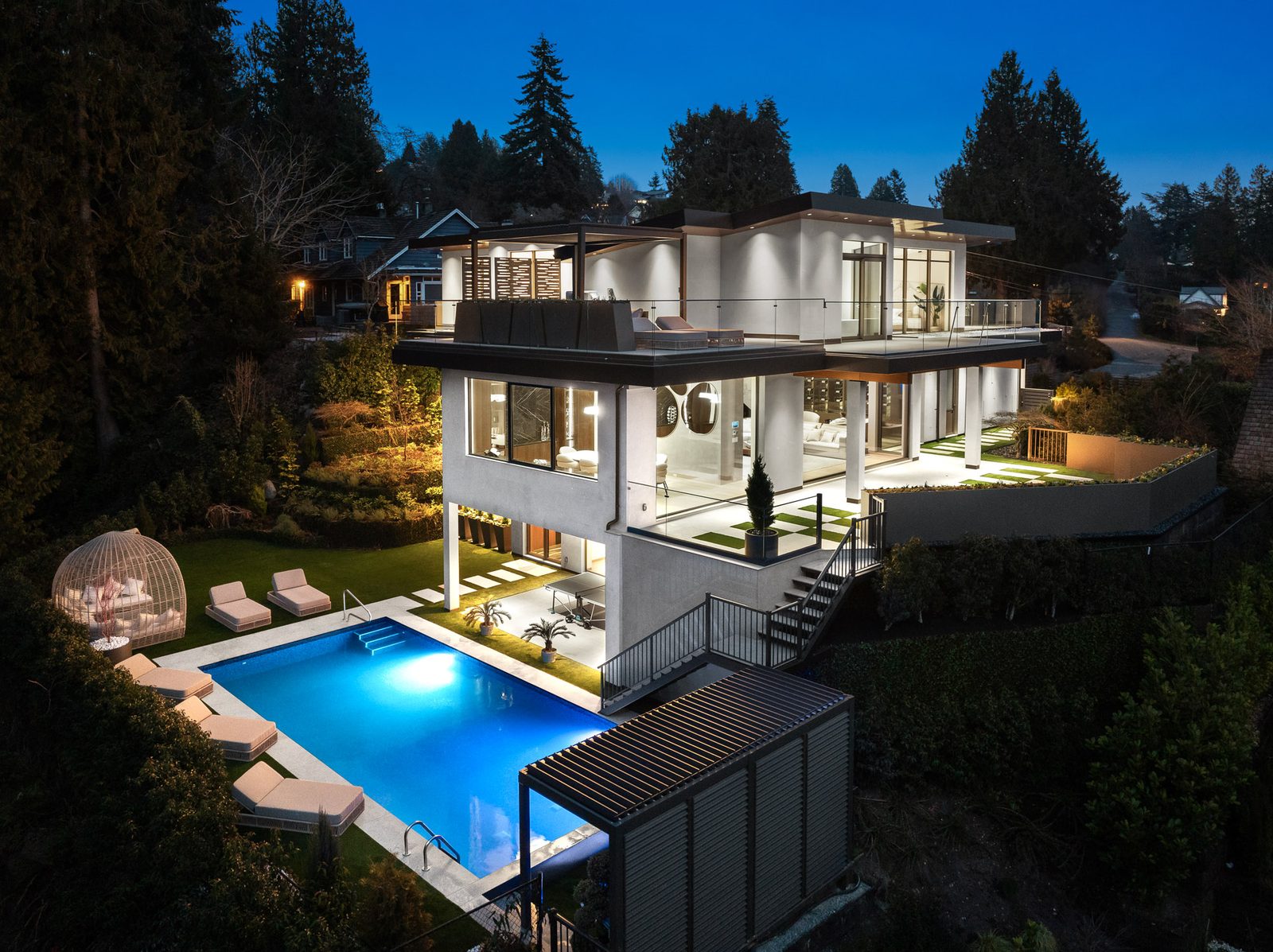
Building a custom home or taking on a major renovation is one of the biggest financial commitments you'll ever make. Whether you're constructing a new residence in West Vancouver, renovating a home in North Vancouver, upgrading a property in Lions Bay, or building a mountain retreat in Whistler, the contract you sign with your general contractor will shape the entire experience.
There are two primary contract types in residential construction: fixed price and cost-plus. The difference between them isn't just about numbers on a page. It determines who carries the financial risk, who pays for mistakes, and whether you'll know the final cost of your home before or after it's built.
Over the past 16 years, we've worked under both models across more than 100 projects. Our experience has been clear: when supported by thorough design and professional planning, fixed price contracts provide the highest level of certainty, accountability, and peace of mind for homeowners.
What Is a Fixed Price Contract?
A fixed price contract does exactly what the name suggests: it establishes a clearly defined total cost for your project before construction begins. That price is based on completed architectural drawings, interior design documentation, engineering coordination, and a fully defined project scope.
Under this arrangement, the contractor takes responsibility for delivering the project within the agreed budget. If something goes wrong during construction (a coordination error, a missed detail in the drawings, unexpected rework), those costs belong to the contractor, not to you.
What a Fixed Price Contract Gives You
A guaranteed construction cost. A clearly defined scope. Protection from cost escalation caused by contractor errors. Financial predictability from day one. And strong accountability, because when the contractor's own margin is at stake, they have every incentive to get it right.
This level of certainty matters enormously when project budgets reach hundreds of thousands or millions of dollars, which is common for custom homes in West Vancouver and the North Shore.
What Is a Cost-Plus Contract?
A cost-plus contract works very differently. Instead of agreeing on a total price, you pay for the actual cost of everything (labour, materials, subcontractors, equipment), plus a contractor management fee, typically a percentage of total costs.
On paper, this sounds transparent. In practice, it means you won't know the final cost of your home until the last invoice arrives. And here's the part that catches many homeowners off guard: under a cost-plus agreement, you pay for everything. That includes the contractor's own mistakes, rework from coordination failures, costs arising from incomplete drawings, and decisions that should have been resolved before construction started.
Cost-Plus: The Homeowner's Risk
- Final cost unknown until completion
- You pay for contractor errors and rework
- Incomplete drawings generate endless surprises
- All cost increases fall on the homeowner
- No timeline accountability
- "It will cost as much as it will cost"
Fixed Price: The Homeowner's Protection
- Guaranteed total cost before construction
- Contractor absorbs their own errors
- Complete design eliminates surprises
- Change orders only for changes you request or unforeseen conditions
- Timeline guarantees with penalty clauses
- Performance bonds for third-party assurance
Too many homeowners describe their cost-plus experience with a phrase that has become almost a running joke in the industry: "It will cost as much as it will cost, and it will take as long as it will take." That's not a construction contract. That's an open chequebook.
Why So Many Custom Homes Go Over Budget
The single most common cause of budget overruns in residential construction isn't bad luck or material price spikes. It's incomplete design documentation.
Most architectural drawings (even good ones), don't contain enough detail to fully define every construction and interior element. They'll show floor plans, exterior elevations, and structural layouts. But they often leave out the details that actually drive cost: interior wall elevations, millwork specifications, lighting and electrical coordination, material selections, fixture integration, and finish details.
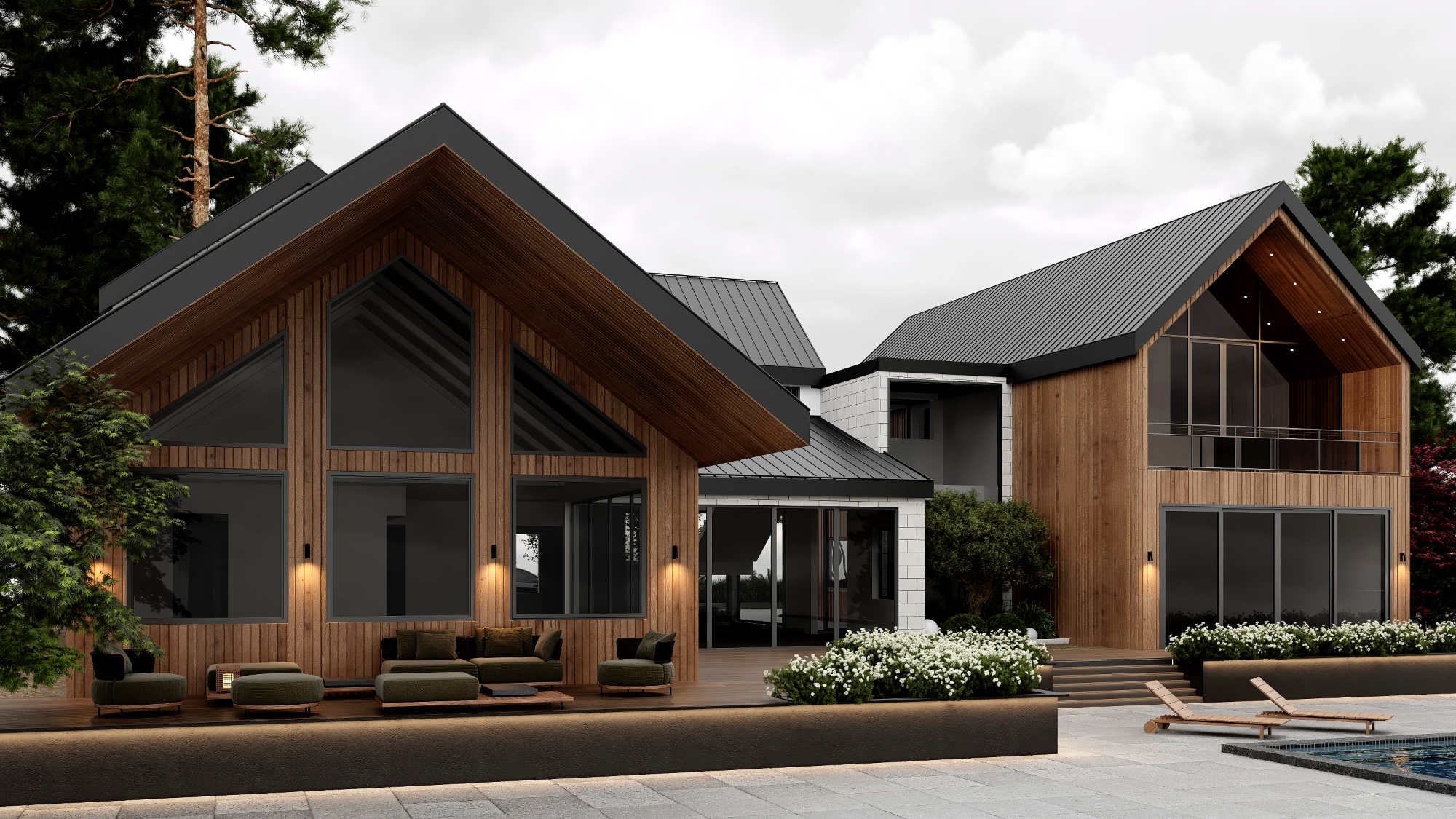
When these details are missing, contractors fill the gaps with assumptions. And as decisions get made during construction (which tile, which countertop, which lighting layout, how that staircase actually connects to the ceiling), those assumptions change. Every change generates a cost adjustment. And under a cost-plus contract, every one of those adjustments lands on the homeowner's desk as an additional invoice.
This is the fundamental problem. It's not that contractors are dishonest. It's that nobody can accurately price what hasn't been defined.
The Solution: Complete the Design Before You Build
At Eurohouse Studio, we solve this problem at the source. Before construction starts, we complete a fully integrated design process that leaves nothing undefined.
This includes complete architectural drawings, detailed interior design documentation with wall-by-wall elevation drawings for every room, photorealistic 3D renderings so you can see exactly what your home will look like, comprehensive material and finish specifications, and engineering coordination to validate that everything is buildable as designed.
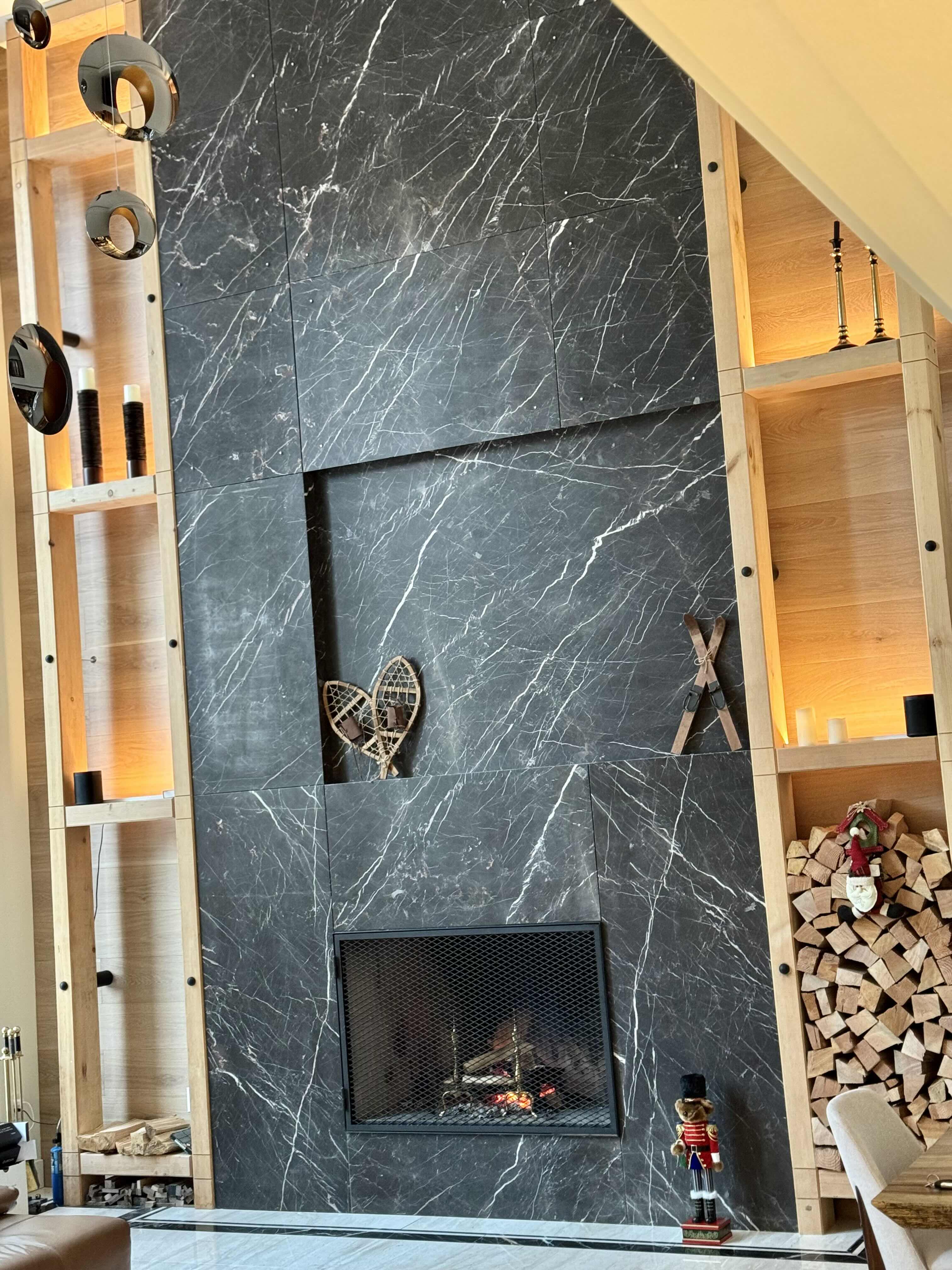
When the homeowner has seen every space in photorealistic 3D and approved every material and detail, there are no assumptions left. And when there are no assumptions left, we can hold a fixed price against that scope.
The Key Insight
When the company that designs your home is the same company that builds it, there's no gap between intent and execution. We design with constructability in mind: every specification is realistic, every detail is buildable, and every cost is accounted for before construction begins. That's what makes a true fixed price possible.
Change Orders: Who Pays for What?
This is one of the most important distinctions between the two contract types, and it's worth being direct about it.
On a cost-plus contract, the homeowner pays for everything, including the contractor's errors, drawing imperfections, coordination failures, and rework. If the framing crew misreads a dimension and has to redo a wall, you pay for it. If the plumber and electrician weren't properly coordinated and work has to be torn out, you pay for it. All of it gets billed to you as "actual costs."
On a fixed price contract, those costs belong to the contractor. If we make an error, it comes out of our margin, not your budget. Change orders only happen when you decide to make a modification, a different countertop, an added feature, a layout change you want after seeing the space take shape. That's a legitimate change order, and it's priced transparently. But it's your choice, not our mistake. The narrow exceptions every fixed-price contract carries are genuinely unforeseen conditions: concealed damage found once demolition opens a wall, hazardous materials, or a change an authority requires.
Performance Bonds: A Third-Party Guarantee
Eurohouse Construction carries performance bonds on qualifying projects. A performance bond is a third-party financial guarantee (issued by a bonding company) that the contractor will complete the project according to the agreed scope, price, and timeline.
Performance bonds are standard in municipal construction and insurance restoration. Municipalities and insurance companies work exclusively on fixed price agreements because they require absolute cost certainty. There is no such thing as cost-plus on that level of contract. And the performance bond is the mechanism that enforces it.
The fact that we can secure performance bonds for residential projects tells you something important: a bonding company has independently verified that we have the financial stability and track record to deliver on our commitments. That's a level of assurance that no cost-plus contract can offer.
Timeline Guarantees
In addition to fixed pricing, we provide clearly defined construction schedules and accept delay penalty clauses. We're comfortable with this because when the design is complete, the scope is clear, and the team is aligned, construction timelines are predictable.
We do ask that this commitment works both ways. Timeline guarantees are meaningful when the project operates within a cooperative framework: timely homeowner decisions, timely progress payments, and a healthy working relationship between all parties. When those conditions are in place, we stand behind the dates we commit to.
When a Hybrid Approach Makes Sense
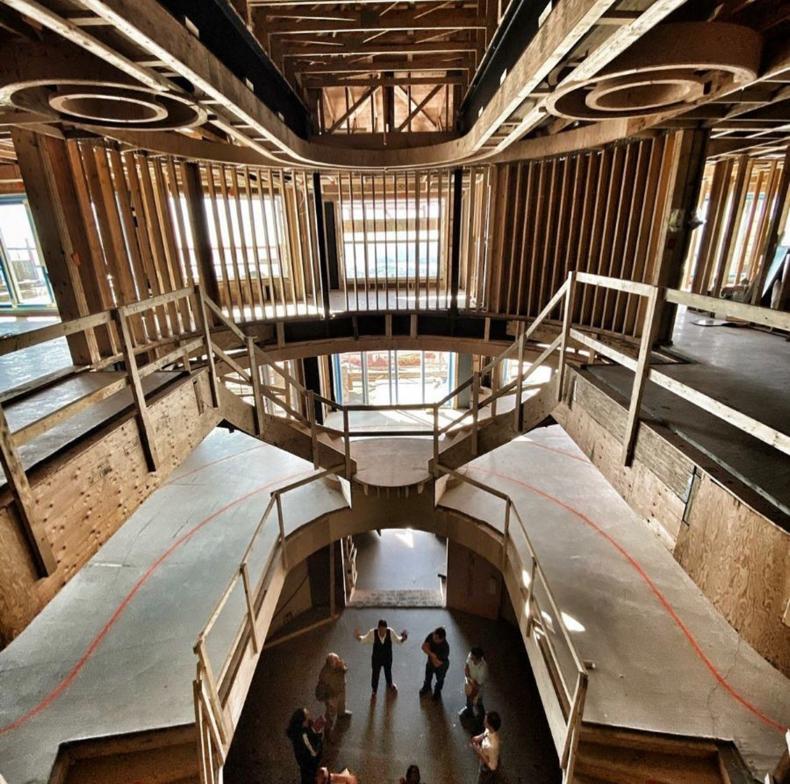
We believe in being straightforward. While fixed price contracts provide the highest level of protection, there are situations where certain limited elements of a project genuinely cannot be fully defined in advance. This typically happens when working with existing structures, concealed building components, or conditions that can't be fully inspected before construction starts.
In these cases, we offer a hybrid model: the vast majority of the project remains fixed price, with only specific, clearly identified elements handled transparently on a variable basis. Because our design process is so thorough, hybrid components are typically minimal. But we'd rather be honest about what can and can't be guaranteed than make promises we can't keep.
The Turnkey Advantage
Building a custom home requires hundreds of decisions. For busy homeowners, the process can become overwhelming, especially when it involves coordinating multiple separate firms for architecture, interior design, engineering, permitting, and construction.
Eurohouse Studio and Eurohouse Construction provide a complete turnkey solution under one roof: house design, interior and exterior design, engineering coordination, building permit applications, municipal process management, construction, and even furniture and decoration supply. One team, one contract, one point of accountability, from the first sketch to the day you move in.
This isn't just about convenience. It's about alignment. When every phase of the project is managed by the same team that will ultimately build it, decisions are made with constructability, cost, and timeline in mind from the very beginning. That's what eliminates the surprises that plague fragmented project delivery.
Who Benefits Most from Fixed Price?
Fixed price construction is ideal for custom home construction in West Vancouver, luxury home renovations in North Vancouver, residential projects in Lions Bay, custom homes and vacation properties in Whistler, condominium renovations in Vancouver, and insurance restoration projects across the North Shore.
In short, if you're investing significantly in your home and you want to know what it will cost before you start, fixed price with complete design is the way to protect that investment.
Before you sign: a fixed-price contract checklist
“Fixed price” is reassuring. The important reading starts immediately after those words. What work is fixed? Which drawings describe it? What is still an allowance? What happens if you change the design? This checklist helps you prepare that discussion before signing. The Canadian Home Builders’ Association’s renovation-contract guide is a useful companion read.
1. Identify the exact work being purchased
Record the drawings and specification revisions forming the agreement. Include enough product and installation detail to connect the price to the finished result.
A finish description such as “premium bathroom” can mean different things to different people. A fixture schedule, surface selection and relevant details make the intention clearer.
Ask the builder to explain how conflicting information between documents would be resolved. That conversation belongs before a discrepancy becomes an on-site decision.
2. Make allowances and exclusions easy to find
Request a consolidated schedule rather than relying on scattered notes.
- Allowance: The amount, covered scope and adjustment method
- Exclusion: Who will arrange the work and where it is budgeted
- Owner-supplied item: Delivery, installation and responsibility for compatibility
- Unresolved condition: The assumption used and procedure if it changes
- Taxes: Whether they are included or additional
Do not count an allowance as a completed selection. Ask whether it reasonably reflects the level of product you intend to choose.
3. Connect payments to the agreed process
Read how invoices are prepared, what information accompanies them and when payment becomes due. Clarify deposits, progress payments and the completion process.
Have your legal adviser explain applicable lien and holdback obligations for the project. The purpose is to understand the actual agreement and local requirements, rather than relying on a percentage remembered from another province or a previous project.
Before signing, make sure the payment process is practical for you, including any lender requirements.
4. Describe changes before anyone needs one
Ask what a change record will show. It should let you understand the work being added or removed and the effect on cost and timing.
Discuss who can approve a change and how the approval is recorded. If several household members attend meetings, nominate the person authorized to give the final direction.
Use an example: changing the size of a window after related work has been ordered. Walk through the process before encountering it during construction.
5. Define the schedule’s starting conditions
Identify what must be in place before the construction clock starts. That may include permits, access, completed selections or other conditions stated in the agreement.
Then read how delays and extensions are handled. A calendar date and a duration are not interchangeable unless the starting point is clear.
Ask how the team will report progress against the current schedule and highlight decisions that require your attention.
Agree what happens if the start moves
Use a practical scenario: a required approval arrives later than expected. Ask how the agreement handles the construction slot, price validity, stored materials and any remobilization costs. Establish what requires written notice or approval.
A useful schedule discussion explains responsibilities if dates change as well as the dates everyone hopes to achieve.
6. Make completion more specific than “finished”
Discuss the walkthrough, the recording of outstanding items, required approvals, manuals, keys and system orientation. Understand how unresolved items are handled and which obligations continue after handover.
Ask for the warranty documents relevant to the project and the contact process for raising a concern. If bonding is part of the proposal, review the actual bond and its conditions with your adviser rather than treating the term as a substitute for reading it.
Questions to take to the contract meeting
- Which document defines each major part of the work?
- Where are the remaining selections and assumptions listed?
- What events could change the price?
- What must we supply or decide, and by when?
- How are differences between us addressed?
- What information will we receive at handover?
These questions test clarity. They do not replace review of the actual legal agreement.
Common questions about fixed-price contracts
Does fixed price mean we cannot change our minds? No. Changes may be possible under the contract’s process, with corresponding price or schedule adjustments. Understand the implications before authorizing them.
Can hidden conditions affect a renovation price? They may, depending on the agreement. Discuss the investigations completed and the treatment of remaining concealed conditions explicitly.
Is a written quotation enough? The complete agreement should address the scope and the working relationship. Have the appropriate adviser review the documents for the value and complexity of your project.
A Personal Consultation
Every home and renovation project is unique. We welcome homeowners in West Vancouver, North Vancouver, Lions Bay, Whistler, and Vancouver to meet with us for a private consultation. We'll assess your project, discuss whether fixed price, hybrid, or another approach is right for your situation, and provide a clear roadmap from design through construction.