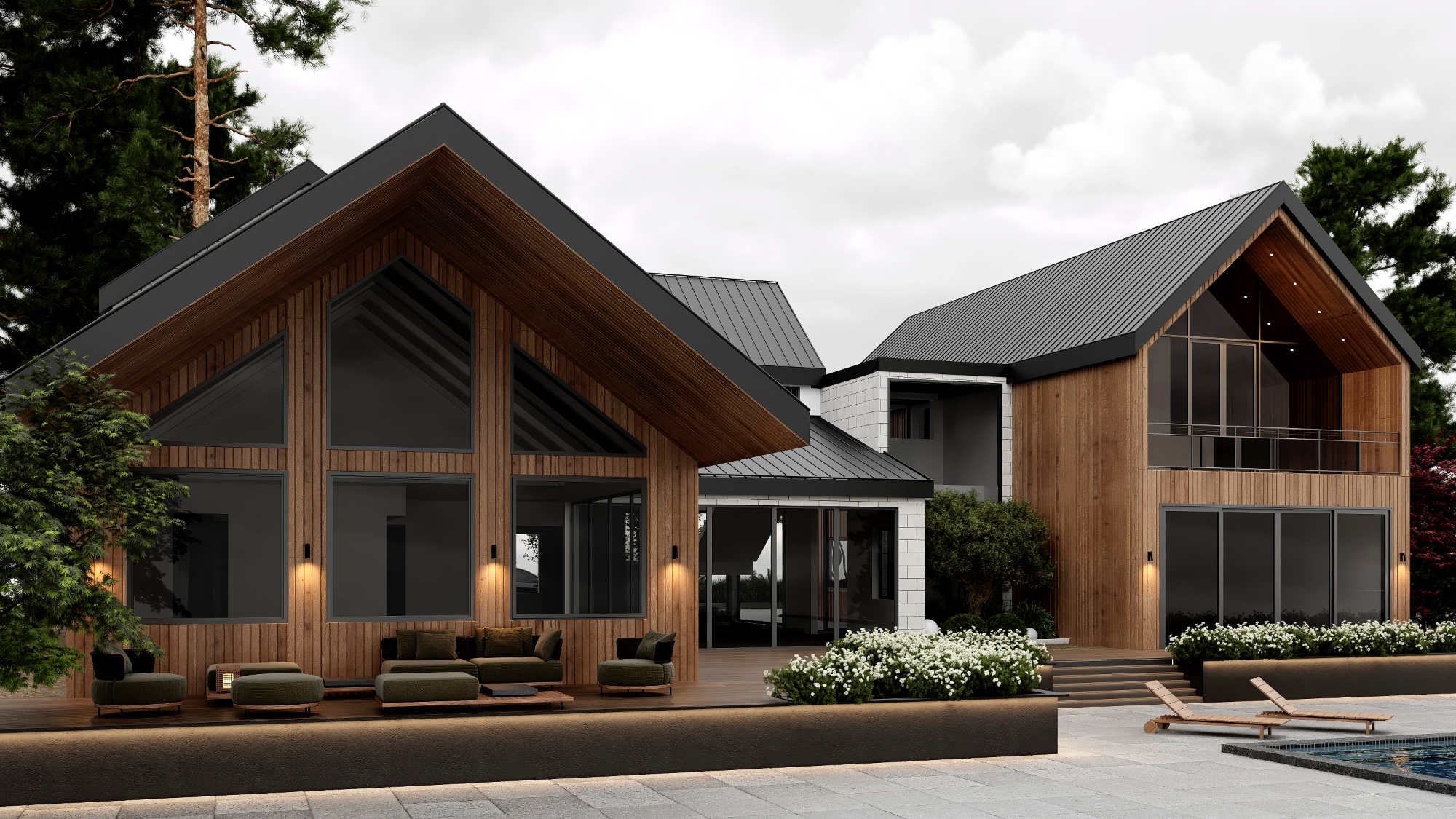
Buying land in West Vancouver or the Lower Mainland is a major investment. One of the biggest decisions that follows (and the one that often determines whether your project runs smoothly or becomes a series of costly resets) is how you structure the team and the process.
Many homeowners begin by hiring an architect or designer, and for good reason. A strong design professional brings creative vision, spatial intelligence, and the ability to turn a piece of land into something genuinely exceptional. That talent is real, and it matters.
Where projects get into trouble is rarely "bad design." It's the handoff. Too often, the design progresses in isolation, and construction input arrives only after months of development. The estimate comes back 30-40% over budget. The site has geotechnical conditions nobody accounted for. The permit process stalls because engineering wasn't coordinated with the design. Changes are still possible, but they're more expensive, more time-consuming, and harder on everyone involved.
The design professional didn't fail. The process failed, nobody brought construction reality into the conversation early enough.
That gap is exactly what a design-build approach is designed to solve, and it works whether you start with your own architect, ask us to recommend one, or work with our in-house design studio.
Why Construction Expertise Needs to Be in the Room from Day One
The most expensive mistakes in custom home construction happen when design and construction operate in separate silos. Not because the people involved aren't talented, but because the structure doesn't allow critical information to move at the right time.
A design can be brilliant on paper and still carry major cost and schedule consequences that only become visible when someone with deep construction experience pressure-tests it. An architect can design a breathtaking cantilevered living space, but without construction input during the design phase, nobody knows whether that cantilever requires $80,000 or $300,000 in structural steel until the drawings are finished and the homeowner is already committed to the concept.
A design-build approach keeps the design momentum while ensuring that constructability, budgeting, engineering coordination, and schedule realities are integrated early, not reconciled later.
Early Site Analysis Prevents Expensive Mistakes
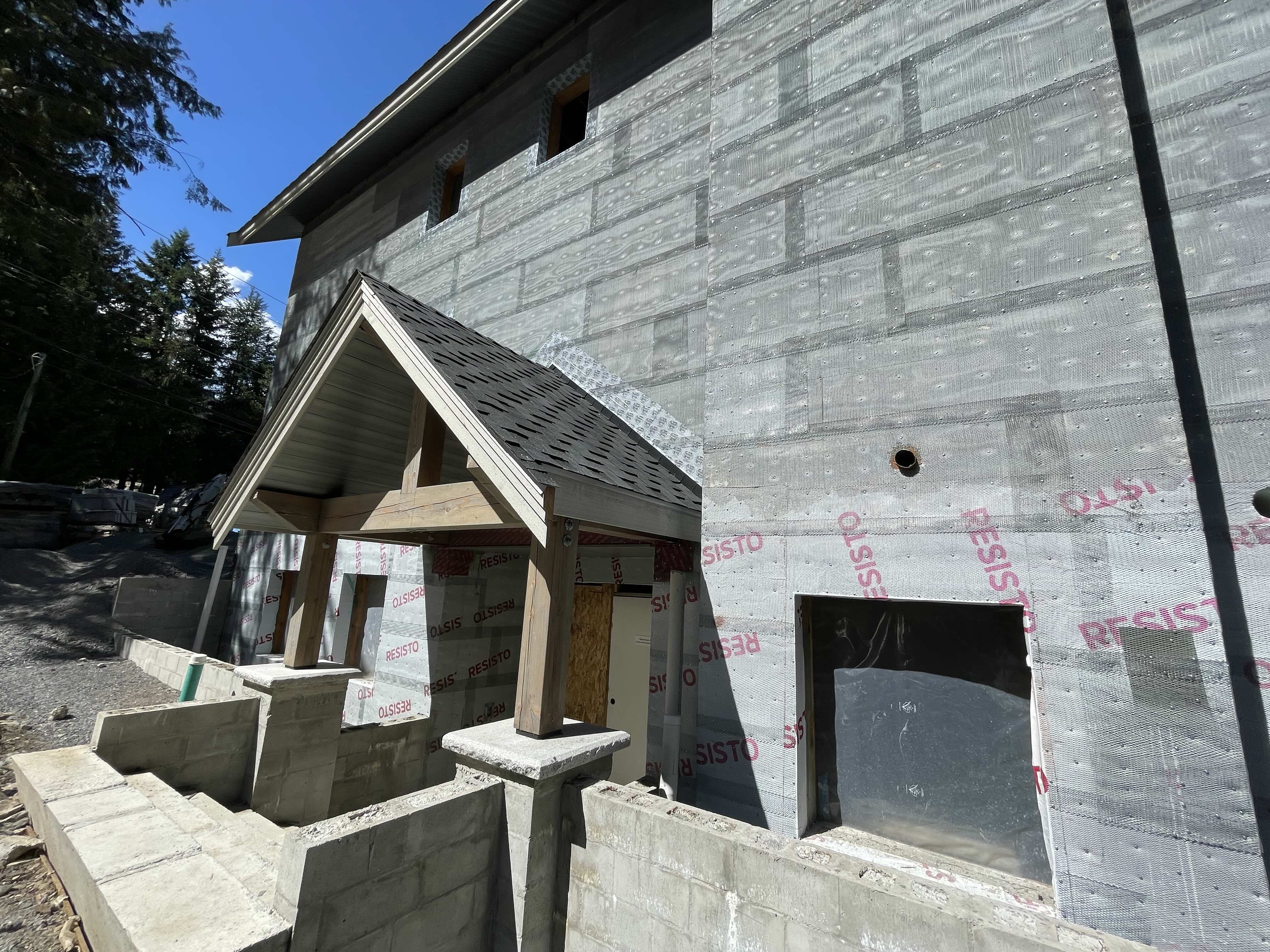
Land in West Vancouver and the North Shore often comes with conditions that don't show up in a real estate listing: slopes, rock, drainage, tree protection bylaws, geotechnical constraints, and strict municipal requirements.
These are construction realities. A design professional can interpret bylaws and setbacks, but the true cost and logistics impact of a site becomes clear when it's evaluated through a construction lens: foundation strategy, retaining needs, access, excavation method, and the practical realities of building on that specific lot. Will the municipality require a retaining wall that adds $200,000 to the project? Does the slope demand blasting that changes the entire foundation approach?
When that analysis happens before design is advanced, the design team (whether your architect or ours) has the information they need to create something ambitious and buildable. When it happens after, the project often turns into a painful scope-reduction exercise.
Realistic Budgets from Day One
Construction costs in the Lower Mainland move fast, and pricing accuracy depends on current trade conditions, procurement timing, and scope definition. Architects and designers are not meant to be construction cost estimators, that's a different discipline entirely. An architect's job is to design the best possible home. A builder's job is to know what it costs and how to deliver it.
Problems arise when these two disciplines don't connect until the design is finished. The homeowner learns the true cost only after months of architectural development, when adjustments are harder, slower, and more expensive.
A design-build approach integrates budget and pricing into the design phase. Every major choice (structure, envelope approach, mechanical strategy, materials, and square footage) is evaluated against the homeowner's financial target as the design evolves. The result is a budget that stays grounded throughout the process, not a surprise revealed at tender.
The Core Problem Design-Build Solves
In the traditional process, a homeowner invests months in design and then hands completed drawings to a contractor to discover what they cost. By that point, the emotional investment is enormous and the options are limited. Design-build reverses this: cost, constructability, and site realities are part of the design conversation from day one, so the architect's vision and the homeowner's budget stay aligned as the design evolves, not reconciled after the fact.
Faster Permits and Smoother Approvals
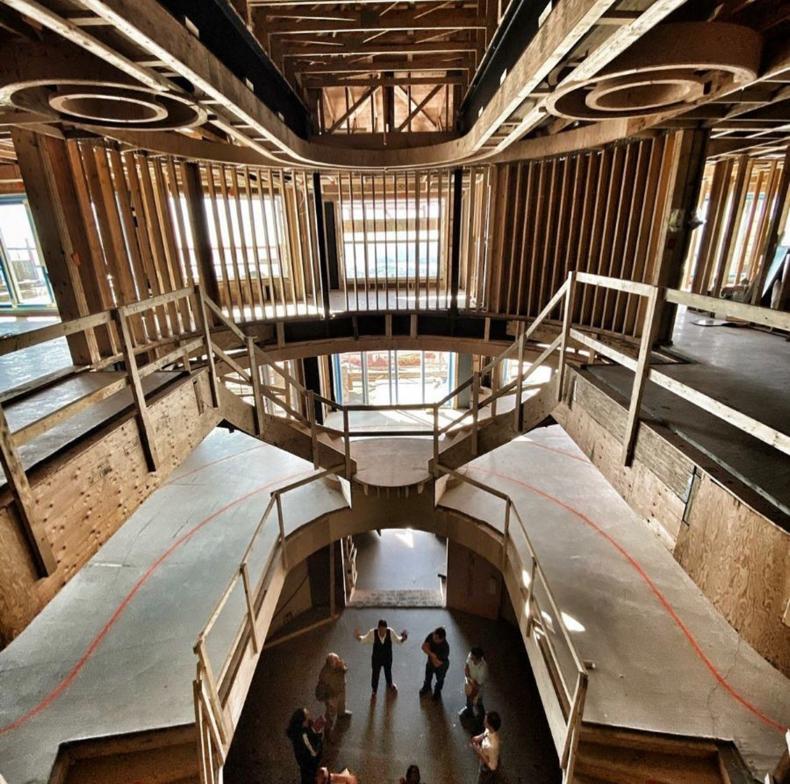
West Vancouver, North Vancouver, and Vancouver have detailed permitting processes with strict technical requirements. When design, engineering, and construction are managed under separate contracts, permit submissions can become inconsistent or incomplete, leading to rounds of revisions and months of delays.
A design-build team coordinates the inputs that typically cause friction: architectural drawings, structural and geotechnical engineering, envelope strategy, energy requirements, and municipal planning requirements. Submissions go in aligned, coordinated, and packaged in a way reviewers can approve more efficiently, reducing back-and-forth and protecting your schedule.
One Point of Accountability
When a homeowner hires an architect, consultants, and a general contractor under separate contracts, nobody owns the full picture. If an issue lands between scopes, each party may have a contractual reason to treat it as outside their responsibility, and the homeowner ends up mediating between professionals and paying for the gaps.
This isn't about blame. Architects, engineers, and builders are all doing their jobs within their contracted scope. The issue is structural: separate contracts create seams, and problems tend to live in those seams.
Design-build reduces those seams. One coordinated team, one aligned process, and one point of accountability from early planning through completion.
Why This Matters Even More in the Lower Mainland
Building in this region is different from building in most parts of Canada. The combination of steep terrain, strict municipal bylaws, geotechnical requirements, high construction costs, and architecturally complex expectations means a fragmented approach almost inevitably leads to delays, redesigns, and budget increases.
A design-build approach ensures the project is realistic, coordinated, code-compliant, and financially controlled from the very beginning. It's not just a convenience, in this market, it's a safeguard.
Already Working With an Architect or Designer?
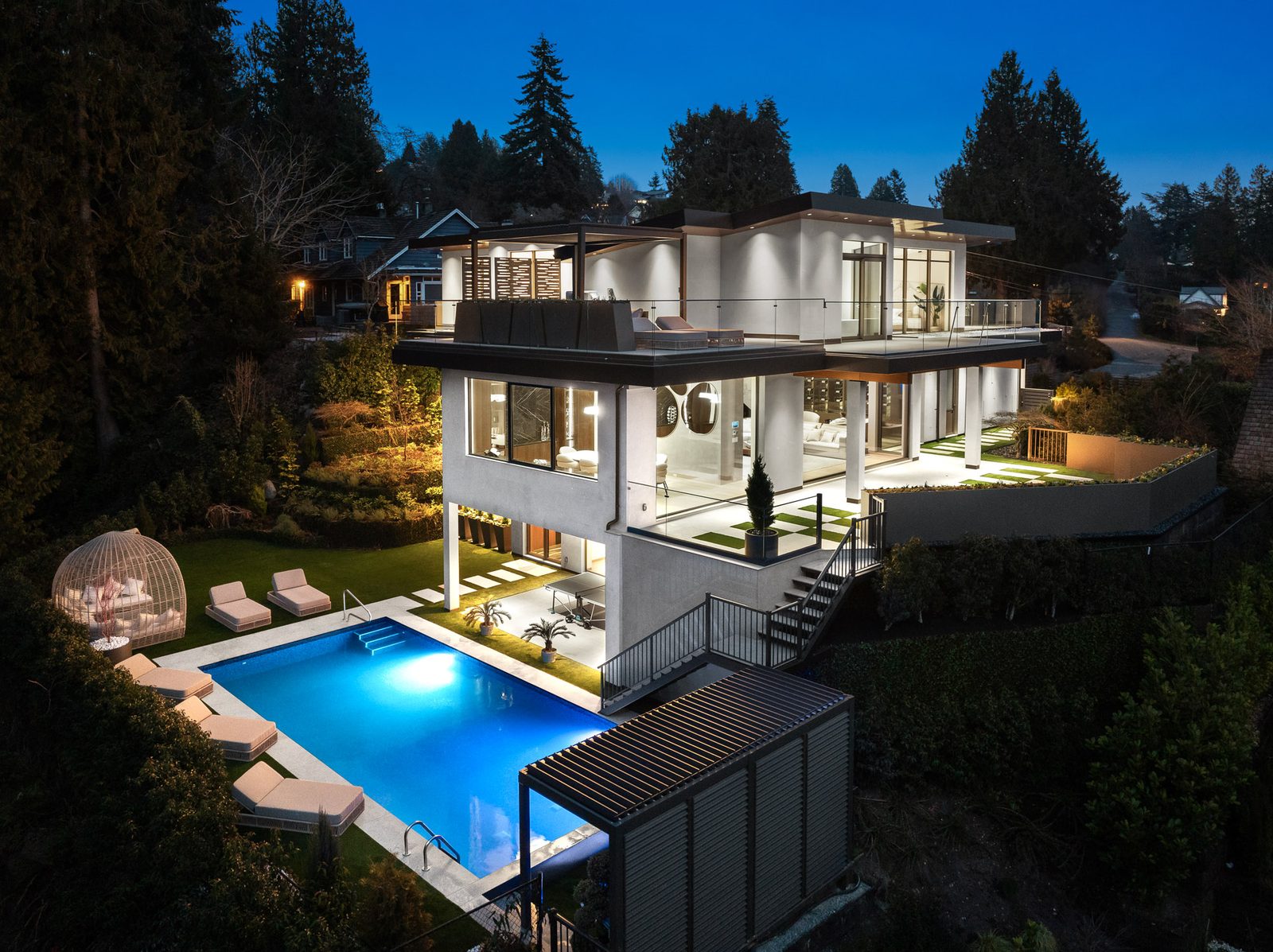
If you've already engaged an architect or designer (or have someone you'd like to work with), that's a strong starting point. Great design is the creative foundation of a custom home, and we respect that.
In our process, your architect or designer becomes part of the design-build team: supported by current market pricing intelligence, site feasibility analysis, engineering coordination, constructability review, and clear sequencing. Their creative work gains the construction backbone it needs: every design decision is evaluated against real costs, real site conditions, and real timelines as the project evolves, not after the drawings are finished.
The result is a stronger design, a realistic budget, and a clear path from concept to completion, with your architect's vision fully intact and your investment fully protected.
How We Support Your Architect or Designer
Early cost ranges by major system structure, envelope, mechanical, interior finishes, so the design team works with real numbers from the start.
Constructability review flagging cost and schedule drivers before they become problems embedded in the drawings.
Engineering coordination so structural, geotechnical, and envelope documents stay aligned across disciplines.
Long-lead procurement mapping integrated into the design timeline so material selections don't delay construction.
Homeowner decision tracking aligned to scope, budget, and schedule to prevent redesign cycles.
"But I Don't Know What I Want Yet"
If you're starting from scratch (no drawings, no clear style direction, maybe just a piece of land and a vision), that's completely normal. Many of our clients begin exactly this way.
We can connect you with independent architects and designers whose creative strengths match your project and bring them into a design-build process where construction expertise, cost data, and engineering coordination support their work from the start. Or you can work with our in-house design studio, where design and construction are fully integrated from day one, the fastest path from concept to a fixed-price contract.
Either way, every project follows the same disciplined structure: design ambition grounded in construction reality, with your budget informing every decision as the design evolves.
If you don't yet know what you like or dislike in terms of style, that's also completely normal. Here's how we help:
We guide you through a discovery process
A short conversation and visual exercises reveal what naturally resonates with you: materials, colours, layouts, lighting, mood. You don't need to have the answers. We help you find them.
We build your design identity step by step
Inspiration images, mood boards, and style comparisons. As we explore together, your preferences become clear, often within the first week.
We translate your lifestyle into design
How you cook, how you relax, how you host guests, how natural light moves through your day, how spatial flow and harmony shape the way a home feels: this guides our decisions more than labels like "modern" or "classic." We design for how you actually live.
We remove the overwhelm
Instead of hundreds of choices, we present a small, curated selection that fits your taste, budget, and long-term priorities. You choose only from options already aligned with your vision.
We make decisions visual
Photorealistic renderings, material samples, and detailed layouts let you see your future space before it's built. No guesswork. No surprises.
You don't need to come with a perfect idea. You only need to come with the desire to build something meaningful. We'll help you find the right direction: clearly, confidently, and step by step.
"Is My Budget Realistic?"
If you have a number in mind for your project (a budget you feel comfortable with), the big question is always the same: "Is this realistic?" And it's completely normal not to know. Construction in the Lower Mainland is complex, pricing changes quickly, and every site has its own conditions.
Our job is to give you clarity early, before you spend time or money going in the wrong direction.
How We Help You Understand Your Budget
Early feasibility check. Based on your land, municipal requirements, and desired finish level, we give you an honest cost range so you know whether your number is in the right zone.
Design aligned with budget from day one. Every design decision is checked against your financial target. No designing in a vacuum and discovering the price later.
Realistic scenarios. We show what your budget achieves in terms of size, materials, engineering, and finish levels, from essential to premium. Clear options, your choice.
Protection from surprises. Site conditions, engineering needs, and municipal requirements are analyzed upfront, preventing the sudden cost increases that plague the traditional model.
Transparency throughout. You always understand where the money goes, what can be optimized, and how to stay within your comfort level.
You don't have to guess whether your number is realistic. With Eurohouse's fixed-price design-build approach, we verify it early, align the design with it, and build a clear, predictable plan around your goals.
The same integrated approach applies beyond custom homes. If you're planning a condo renovation in Vancouver or West Vancouver, the design-build model eliminates the same coordination problems, with the added benefit of strata management handled under one roof.
Your First Step
Whether you're starting with completed drawings, early concepts from your architect, or simply a property and a vision, the smartest first step is getting construction expertise involved early. A design-build approach ensures that your budget, your site, and your design ambitions stay aligned from the beginning, so you build with confidence, not surprises. Start with a conversation →