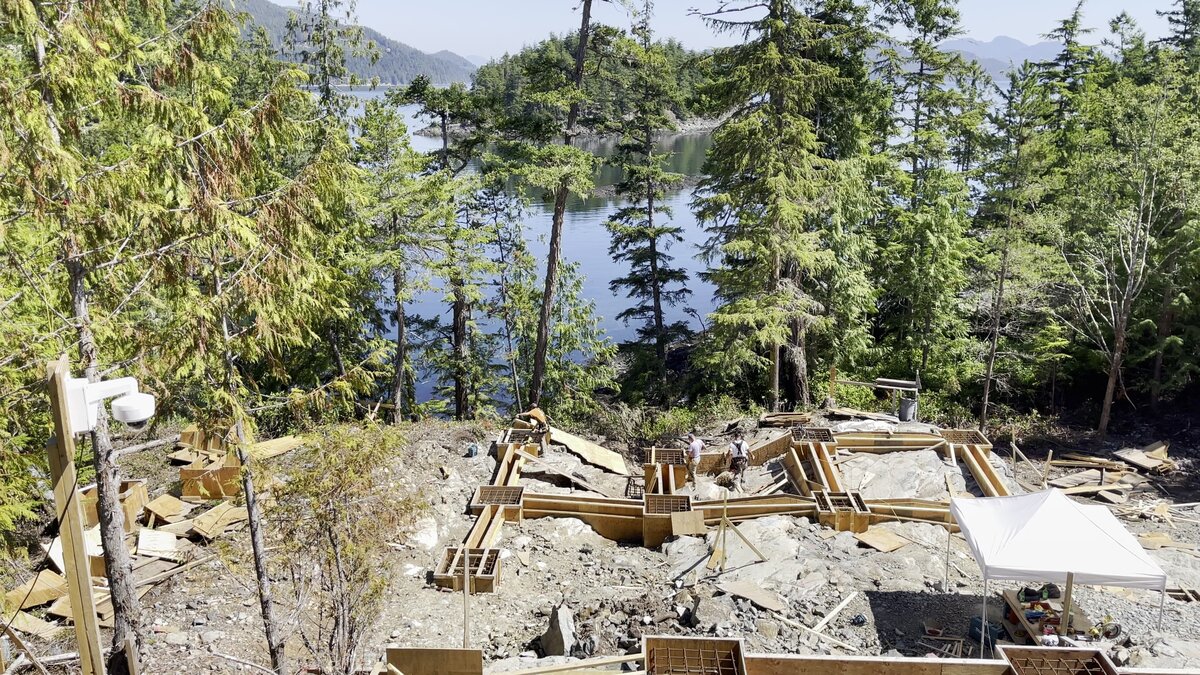
This one surprises even seasoned developers:
In many parts of British Columbia (especially in regional districts and on private islands), you can legally build without a local building permit.
Not everywhere. Not always. But far more often than most people realize.
This article is written for property owners considering rural or island builds, general contractors expanding into regional districts, developers evaluating remote or water-access land, and anyone trying to understand how BC actually regulates construction outside cities.
First Principles: Municipalities vs Regional Districts
BC operates on a split system:
🏙️ Cities & Municipalities
Most cities (Vancouver, North Van, Victoria, etc.) run full building departments:
- Building permits
- Plan reviews
- Framing inspections
- Occupancy approvals
Classic, tightly controlled construction.
🌲 Regional Districts (Rural BC)
Regional districts are different. They may provide building inspection services, but they are not required to.
Many regional districts only regulate some electoral areas… or none at all.
This pattern repeats across coastal BC and the Gulf / Discovery Islands.
Bottom line: If your property is outside an incorporated municipality, there is a real chance no local building permit is required. Always confirm parcel-specific rules, but don't assume city logic applies.
So… What Does "No Building Permit" Actually Mean?
If your area has no building inspection service, then:
- ❌ No building permits
- ❌ No mandatory plan review
- ❌ No framing or envelope inspections
- ❌ No occupancy approvals
You can legally construct custom homes, guest houses, outbuildings, large renovations, and full demolish-and-rebuild projects, without submitting drawings to a local building department.
This includes many private islands, water-access properties, and rural coastal parcels.
It's not a loophole. It's jurisdiction.
The Big Misunderstanding: "No Permit" ≠ "No Rules"
Here's where people get burned.
⚠️ Even without local permits, you are STILL responsible for:
- Structural safety
- Life safety
- Insurance compliance
- Resale marketability
- Future financing
Banks, insurers, and buyers routinely demand proof that your building meets the BC Building Code, even when the regional district doesn't enforce it.
If you can't demonstrate compliance later, your asset becomes illiquid.
Smart owners treat "no permit required" as administrative freedom, not technical freedom.
The One Permit That Almost Always Is Required: Electrical
Regardless of how remote your property is, electrical work in BC is governed provincially by Technical Safety BC.
That means:
- ⚡ Electrical permits ARE mandatory
- ⚡ Rough-in inspections
- ⚡ Final inspections
- ⚡ Applies to solar, generators, panels, service upgrades
This holds true on private islands, rural mainland parcels, and water-access properties.
If wires are involved, Technical Safety BC is involved.
Gas (if applicable) also falls under TSBC.
For many remote builds, electrical ends up being the only true permit + inspection process.
Other Approvals That Commonly Still Apply
Even without building permits, large projects usually trigger these:
🧭 Zoning & Land Use
Regional districts still control zoning. Depending on location and scope, you may need zoning amendments, development permits, or riparian/slope protection approvals. These come through regional planning departments, not building. Skipping this step can shut down a project mid-stream.
🚽 Septic Systems
On-site sewage systems must be designed by an authorized practitioner and filed with Island Health (or the applicable health authority). No filing = no legal use or occupancy.
💧 Water Supply
Wells require provincial registration. Rainwater and hauled systems have additional requirements.
🚤 Docks & Foreshore
Private docks typically require Crown land tenure plus zoning compliance. This is one of the most underestimated timelines on island projects.
⚡ Utilities
Service connections may involve BC Hydro or FortisBC. Remote access does not eliminate utility regulation.
Best Practice for Serious Builds
Experienced owners and GCs running high-value rural or island projects typically:
What Professionals Actually Do:
- Design to current BC Building Code anyway
- Retain structural + geotechnical engineers
- Use sealed drawings
- Arrange voluntary third-party inspections
- Pull electrical permits early
- Document everything for lenders and insurers
- Resolve zoning before mobilizing
This approach delivers faster timelines, fewer bureaucratic bottlenecks, strong resale positioning, and bankable assets.
In other words: flexibility without sacrificing credibility.
Why This Matters
Remote and island construction already comes with barge logistics, weather exposure, limited trades, emergency access constraints, and higher capital risk.
The absence of local permits can accelerate schedules, but it also removes guardrails.
Projects succeed when freedom is paired with professional oversight.
Final Takeaway
Yes, in many BC regional districts and private island locations, you can legally build without local building permits.
But:
- Electrical is almost always required
- Zoning still matters
- Septic still matters
- Insurance still matters
- Future buyers still matter
The smartest builds combine jurisdictional flexibility with engineering discipline. That's how you create durable, financeable assets, not just houses.
Build bold. Build informed. And never confuse "no permit" with "no responsibility."
Building a custom home in West Vancouver? See how we build custom homes and our design-build process.